DON'T YOU LOVE FARCE?
Comedy of Manners in a Time of Upheaval: Strauss, Bergman, Sondheim, and Mozart
Mostly by coincidence and partly by design, my cultural diet this week has included listening to and watching Richard Strauss’s Arabella, Mozart's Le Nozze di Figaro, and Ingmar Bergman’s Smiles of a Summer Night, as well as Stephen Sondheim’s A Little Night Music (a Broadway musical adaptation of Bergman’s Smiles). This has gotten me thinking about the enduring appeal of romantic and social comedy of manners across the mediums of opera, theatre, and film, and why there is so much overlap among the three.
Arabella (1933): Strauss and the Ghost of Vienna
The craziest thing to me about composer Richard Strauss is how he could write such savagely modern operas as Salome and Elektra, and at the same time so effortlessly return to classic Mozartian themes for Der Rosenkavalier, Ariadne auf Naxos, and Arabella—works that also wouldn’t seem out of place alongside the champagne-farce operettas of Lehár and Johann Strauss (no relation).
There’s also something intriguing about how Richard Strauss and his genius librettist Hugo von Hofmannsthal were able to elevate the frothy upstairs–downstairs themes of the operetta tradition to a Wagnerian level of operatic transcendence in Rosenkavalier, Ariadne, and Arabella. At a time in the 20th century when things were beginning to fall apart in Europe at an alarming rate, perhaps this harking back to Vienna’s golden age was a form of nostalgia. But I actually believe it is the fragile nature of the poetic moments within these dressing-table stories that brings their artistic gravitas to proceedings—something that only a retrospective appreciation of their transience could provide amidst the unravelling of culture and civilisation.
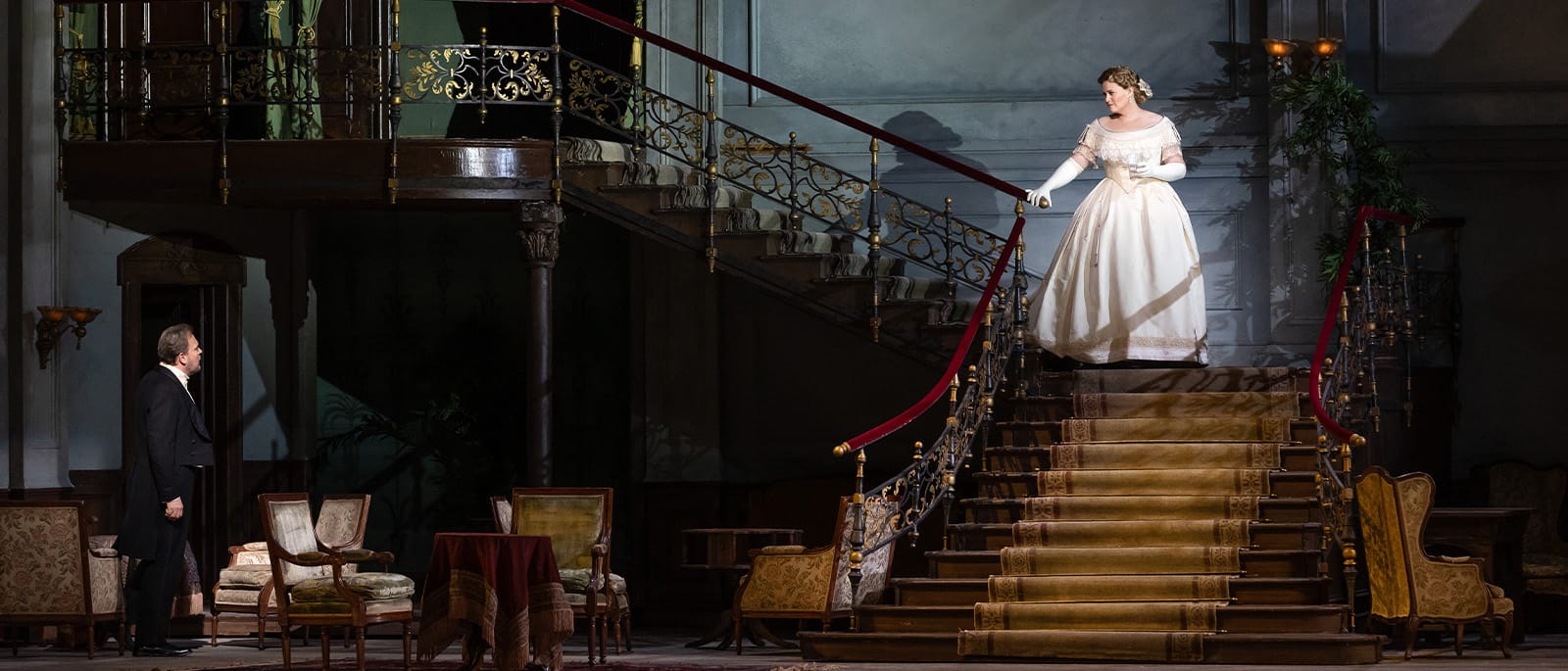
Watching Arabella at the New York Met on Monday evening, I couldn’t help but feel as if I was watching the trace-memory of a vanishing culture from the minds and hearts of more modern men—Strauss and Hofmannsthal—like glass cloches protecting delicate flowers through a metaphorical bleak winter, a societal/cultural winter with no seeming return to spring. The woozy, sliding way Strauss orchestrates from the chromatic back into the harmonic is just one teasing glimpse of a reminder that we're not in the 19th century anymore but the 20th, where certainty in structure is fluid, not absolute.
And, premiering in the same year Hitler came to power, the nostalgia for a disappearing society and culture brought with it an exceptionally high cost.
Smiles of a Summer Night (1956): Bergman’s Farewell to a Genre
In much the same way that Strauss and Hofmannsthal’s postmodern opera Ariadne auf Naxos both distilled and closed the chapter on romantic opera by introducing a more knowing, ironic treatment of a Greek myth (Ariadne)—contrasted with the commentary of a circus troupe—so too does Ingmar Bergman’s Smiles of a Summer Night appear to close the chapter of drawing-room comedy of manners in the Austro-German tradition, not through similar levels of theatrical irony as Ariadne but through sincere tribute. This Swedish “sex” comedy belongs to a lineage that can be traced all the way back to Figaro, and which later inspired filmmakers such as Max Ophüls and Ernst Lubitsch with their sophisticated film comedies of European élan and their sly way of working round the piety of censors. Ophüls’s screen adaptation of Schnitzler's La Ronde, for example, manages to suggest—almost invisibly—the connecting device between all the characters in that hedonistic Viennese society as being a sexually transmitted disease.
In 1956, watching how Bergman both manages to contribute his chapter of this type of European-style comedy yet at the same time demonstrate the more sexual aspect of these types of stories proves that the times were changing and that a hint of sexual revolution was in the air. Though it seems unlikely that Bergman was in any way interested in the counterculture of the 1960s, quite a few of his early ’60s movies aroused the interest of audiences because of their more openly sexual nature.
But it's the emotional underpinning of Smiles and its themes that elevates it above pure farce and touches upon similar feelings of tenderness and melancholy that Strauss and Hofmannsthal delivered so expertly in their operas together.
The poignancy of what Bergman created with a farewell to a distinctly European genre was further emphasised when Smiles was adapted for the stage by Stephen Sondheim and Hugh Wheeler in 1973.
A Little Night Music (1973): Sondheim’s Modern Sophistication
Sondheim's Broadway adaptation of Bergman's Smiles of a Summer Night is ingenious and, in its masterful wordplay and clever use of waltz (3/4, 6/8) variations, elevated the musical yet again to new heights of sophistication.
Of course, its most famous song, “Send In the Clowns,” draws out even greater pathos and emotion than the original Bergman when the actress Désirée Armfeldt recognises the misalignment of intentions and timelines in relation to a love affair with lawyer Frederich Egerman that seems ill-fated to never realise its full potential.
And yet, when a brush with death focuses minds, both Desiree and Frederich will find themselves living happily ever after, a recognition by both that they're getting too old to play foolish games with both their hearts and their lives.
Time and tide wait for no weary heart.
All Roads Lead Back To Figaro
Picking up a pristine vinyl copy of Karl Böhm's classic recording on Deutsche Grammophon of Mozart's masterpiece Le Nozze di Figaro (1786) from a charity shop earlier this week, I was reminded of how so many of the tropes I enjoyed in the later Strauss opera, the Bergman movie, and the Sondheim musical all derived, in one way or another, from this ultimate masterpiece of comic social commentary.
Based on Beaumarchais’s controversial play, which was banned in France for its daring satire of the aristocracy, Figaro was—and remains—a searing depiction of the equality that sits at the heart of all men and women, rich and poor. Its central servant, Figaro, repeatedly outwits his master, Count Almaviva, exposing the moral and sexual failings of the nobility at a time when inherited privilege was rarely questioned—just a few years before the French Revolution. Mozart’s opera preserves this social critique while celebrating human folly, desire, and vulnerability, reminding us that the sins of our flesh make us, for better or worse, human and mortal.
All gods and kings, queens and countesses can be undone by their romantic and sexual desires, but in the end, we must, like Count Almaviva, Mandryka, and Frederich Egermann, finally grow up and seek forgiveness in the tender arms of a Countess, Arabella, or Désirée Armfeldt.