LIEBESTOD
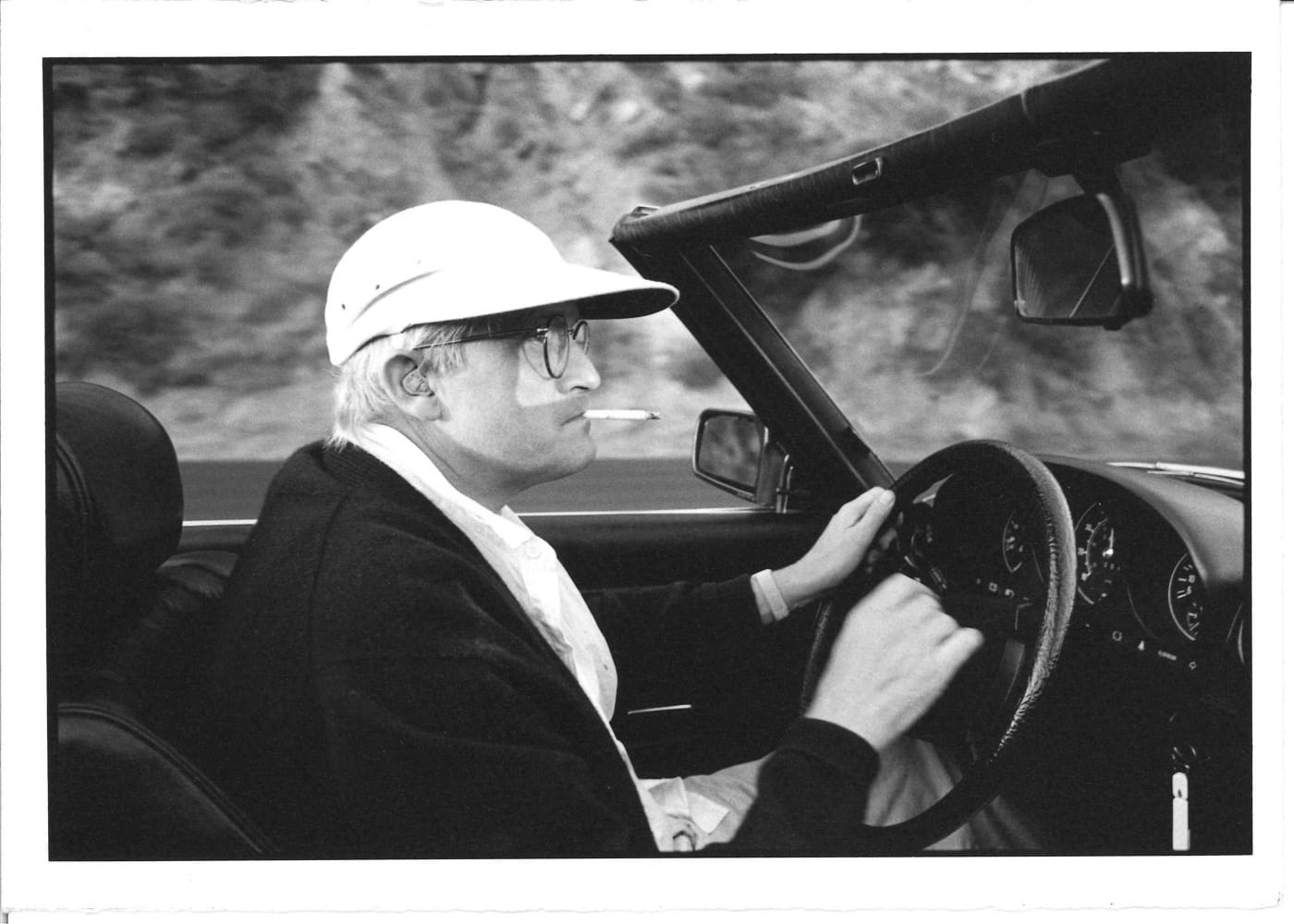
The legendary British artist David Hockney, with his smoker’s laugh, always reminded me, for some reason, of my dear Auntie Hilda, who was one of the greatest people I have ever met. Perhaps it was something to do with them both having a Northern sense of humour and a generally cheery disposition, a kind of defiant optimism at all costs.
Hockney’s capacity for joy was obvious and perhaps never better demonstrated than in his long car rides in Malibu along the coast road, where he would time entire acts of opera, most famously Wagner’s Tristan und Isolde, to reach their climaxes, pun intended, as he drove along the Pacific Coast Highway, the road curling between cliffs and ocean, alongside slowly dimming sunsets.
This type of obsessive joy seeking is proof that the man understood the multisensory totality of art, nature, and existence all at once. If I were to imagine a final image of him disappearing into his next life, it would be of him driving past the dry, ochre Santa Monica Mountains, their scrub-covered ridgelines catching the last amber light, while the Liebestod (“love death”) from Act 3 of Tristan und Isolde accompanies him into the infinite.
Rest in peace, David Hockney (9 July 1937 to 11 June 2026), and may the light never fully fade.