LOST IN THE WORLD
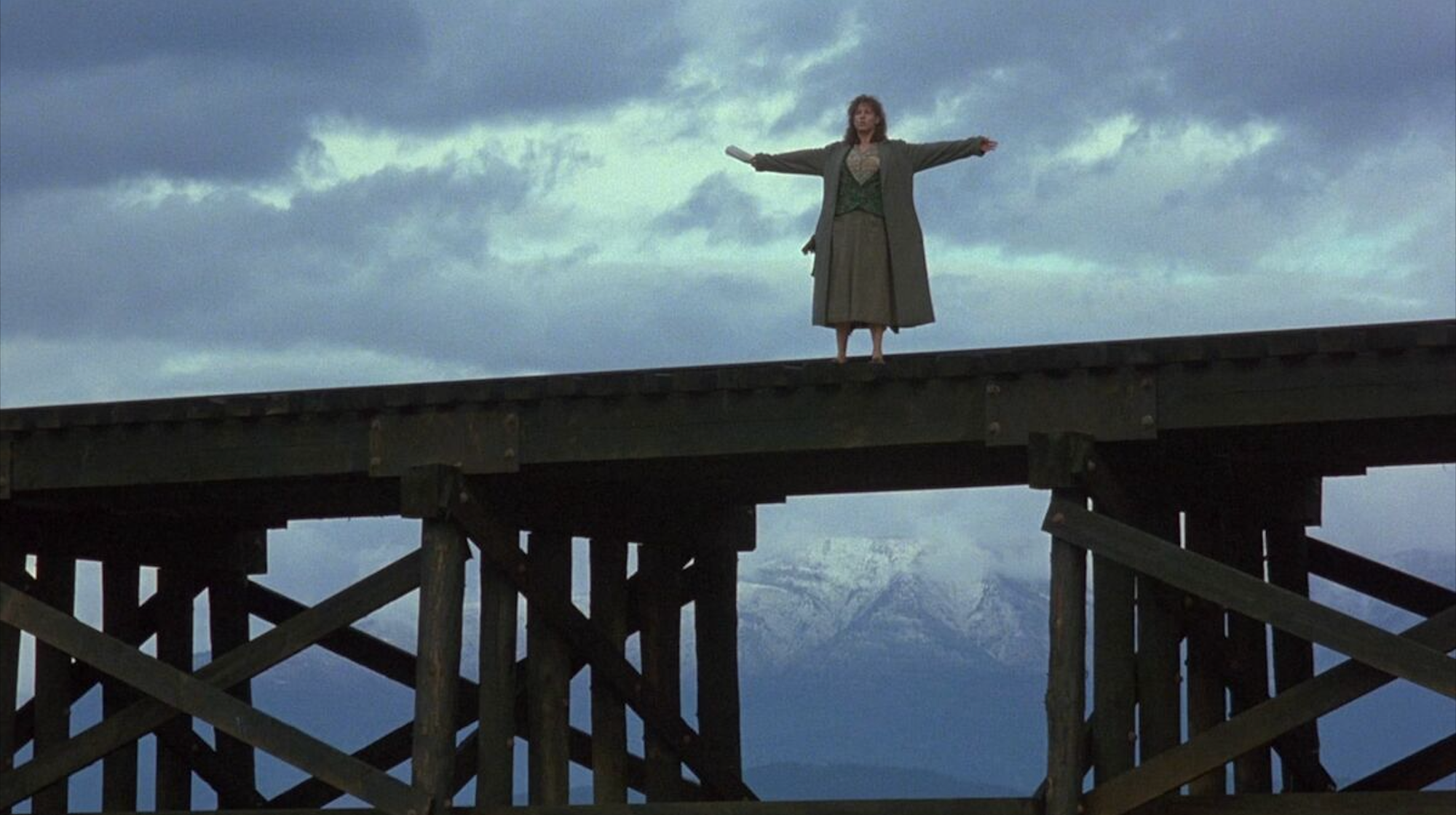
“Families will not be broken. Curse and expel them, send their children wandering, drown them in floods and fires, and old women will make songs of all these sorrows and sit on the porch and sing them on mild evenings.”
I’ve seen some great current film releases lately, including Rental Family, Sentimental Value, and The Secret Agent, but of all the movies I’ve watched in quick succession, none has made a greater impression on me than Bill Forsyth’s Housekeeping (1987), based on Marilynne Robinson’s debut novel.
Having been a huge fan of Forsyth’s other movies, including Gregory’s Girl, Local Hero, and Comfort and Joy, I’m embarrassed to admit it took me far too long to devote my full attention to this lesser-known project of his. Perhaps this has something to do with the strange and, at times, uneasy tone of the film from the outset, which sits somewhere between Terrence Malick’s Badlands, Northern Exposure, and Thoreau’s Walden. It’s clear from the original trailer that this wasn’t an easy film for the studio to sell, but that ultimately benefits the committed film lover, who will find great reward here, as will, no doubt, fans of the book on which it’s based.
Robinson has said in interviews that she doesn’t believe any other director could have done the adaptation any better. She had a definite sense early on, based on Forsyth’s previous films, that he possessed an affinity with nature and environment, which he captured truthfully on film that convinced her that he was the right choice to faithfully present her story on the big screen.
And she’s right. There’s a naturalness and stillness to much of this movie that feels as close as you can get to being outdoors while watching it indoors. You can practically taste the Pacific Northwest air of the environment, the fictional town of Fingerbone, Idaho, in which the small trio of characters exists, occupying a space between reality and dream as they attempt to unravel their knotted fate.
As simple as Robinson’s story appears on the surface, the themes beneath reveal considerable depth. When two young sisters, Ruthie and Lucille, lose their mother after she commits suicide by driving off a ridge into a lake, they become dependent on one another, as if they are simultaneously siblings and parents to each other. Though they are looked after for a few years by their grandmother, once she passes away they have only their eccentric aunt Sylvie to take care of them, and she is, in many ways, more of a child than they are.
The way I interpret the story is that, in the bardo of grief, the two sisters process the loss of their mother quite differently, and Sylvie acts as a symbolic bridge to their future choices as they grow from children into young adults. Lucille ultimately rejects the free-spirited Sylvie in search of a more conventional life with boundaries and parameters, while Ruthie finds freedom in embracing her aunt’s eccentric way of living and her adventures in the wild.
It is not just the spectre of her mother’s death that Ruthie seeks freedom from in living with her peculiar aunt, but also freedom from the conventions of society itself. And when the local community begins to express concern about Sylvie’s unconventional supervision of Ruthie, the freedom they’ve enjoyed in their remote house near the woods is suddenly under threat.
Forsyth expertly conveys both Sylvie’s and Ruthie’s childlike desire to remain free, in nature and within themselves, at the expense of losing the more conventional attachments of belonging to a society that doesn’t understand them.
In this sense, there is a continuity between Housekeeping and lovers-on-the-run movies like Terrence Malick’s Badlands, in which, amidst the darkness of the characters’ situation, a yearning to return to a kind of Garden of Eden is ever present.