MISS CHELTENHAM AND GLOUCESTER
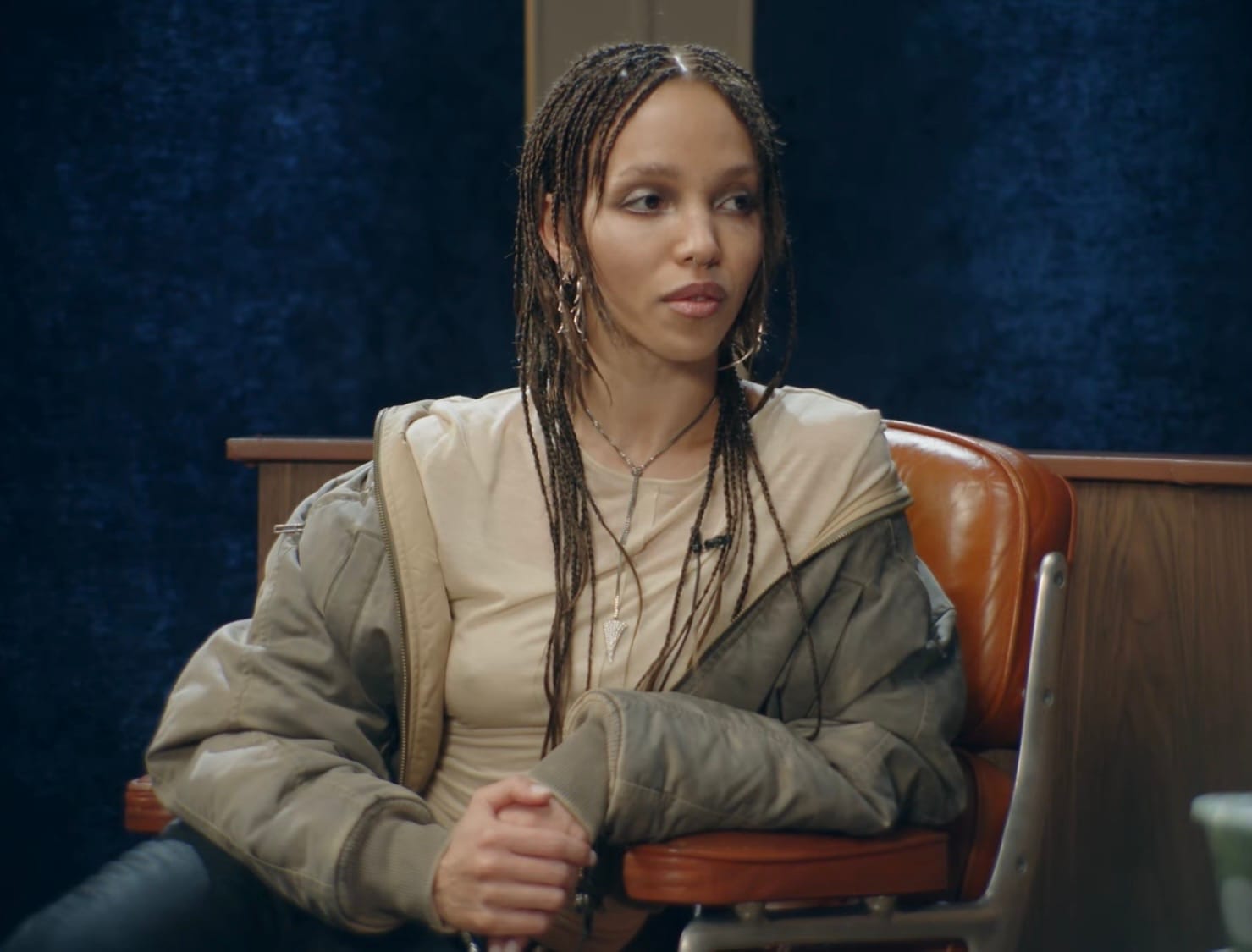
Perhaps I’m a little biased, as the most prominent name in rotation on my music playlist lately was born in my local county of Gloucestershire, where I’m from. Having only recently caught up with Caprisongs and Eusexua, additions to FKA twigs’s consistently impressive discography, which began in 2014 with LP1, I believe she has real longevity. The creative modus operandi for this multidisciplinary artist combines cinematic theatricality, contemporary dance, experimental soundscapes, and more.
At 38, FKA twigs has secured her status as a visionary sculptress of electropop, creating a unique, minimalist, glitch-inflected sound in which ethereal intricacies are scattered across her albums like a fading trail of cooling stars. That is to say, her work is mysterious, beautiful, and constantly surprising.
On top of her undoubted originality, there are clear influences to be detected, including Björk, Kate Bush, Laurie Anderson, Prince, and, yes, Kanye West, who she has claimed changed her life with his performance of “Jesus Walks” at London’s O2 Arena during his Watch the Throne Tour with Jay-Z.
In fact, she collaborated with Kanye West on one of my favourite tracks, “Ego Death,” during the surreal COVID summer of 2020.
Although I was familiar with FKA twigs’s debut album from over a decade ago, I never realised she was a Cheltenham native until I saw her recently being interviewed by Adam Friedland on his deliberately chaotic podcast. As Twigs spoke about her upbringing in Cheltenham, where she was exposed to both ballet and opera thanks to her English mother of Spanish ancestry, she also reflected on how, as a teenager, she felt drawn to the club culture of Gloucester (approximately 9 miles away), which her Cheltenham schoolfriends largely resisted. Her dual heritage became increasingly evident as she found herself split between the more restrictive, culturally white environment of Cheltenham, defined by its Regency architectural aesthetic, and the more Caribbean dancehall and club atmosphere of Gloucester, which had become markedly more multicultural in the post–Second World War period.
The absence of her Jamaican father throughout her early life perhaps prompted her to seek out this part of her identity by proxy in Gloucester’s club scene, and there is something poignant about this duality in such a sensitive artist. There is certainly something intriguing, at least to me, about the fact that a major artist reflects such a relatively subtle contrast between two provincial cities so geographically close to one another, even though she soon departed for the brighter lights of London.
Maybe Twigs does not consider Gloucestershire a crucial aspect of her creative identity now, but from what she articulated during her interview with Friedland, it becomes apparent that she is, inadvertently, a product of her environment, whether she likes it or not.