ODE TO JOHN
For Better, for Worse
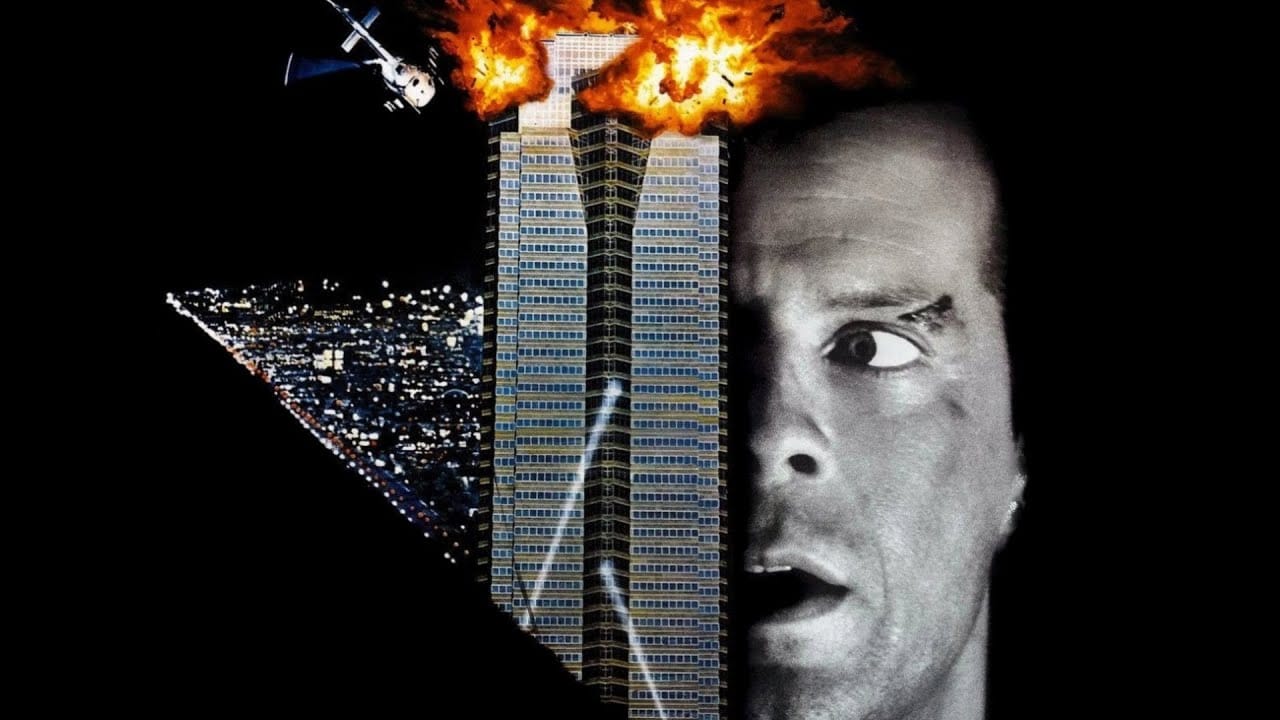
I recently wrote a piece about how one subtextual reading of Hitchcock’s Notorious functions as a rite of passage for a man (Cary Grant) and a woman (Ingrid Bergman), testing their love and trust in one another to near breaking point. It occurred to me the other night that John McTiernan’s Die Hard (1988) follows a similar theme—if not quite in the same way as Hitchcock’s masterpiece.
When John McClane heads from New York to Los Angeles to visit his estranged wife Holly (Holly Gennero, played by Bonnie Bedelia) and their two daughters, it’s clear their adult lives are misaligned. Though they’re still technically married, Holly has reverted to her original surname for professional reasons while working for the Nakatomi Corporation. The uncertainty of their future hangs in the air, and there is clear tension between them at the Nakatomi Christmas party, where John is very much the proverbial fish out of water.
But when terrorist Hans Gruber (Alan Rickman) and his team enter the Nakatomi building and hold the guests to ransom, the very things that make McClane ill-suited to this elite social occasion are also what make him the perfect person to thwart the nefarious plans of Gruber and co. McClane’s instincts are rooted in survival and outwitting this Baader-Meinhof tribute act, and at the centre of his determination to defeat them is the protection of the mother of his children—and still, his wife.
By the end of the movie, he has gone through the fire (to quote Chaka Khan) in order to renew their marriage—if not their vows, then at least the potential for a future together. This is made clear by Holly’s eagerness to inform the media that her surname is McClane once again.
A happy ending, then. Just in time for Christmas.
A Real Hero
Die Hard is one of those films that became an instant classic with barely any critical pushback whatsoever—a cinematic Nakatomi Plaza that stands all by itself among its many imitators in the action-genre landscape. The phenomenon of its success may be attributed to the arrival of a distinctly modern movie star in Bruce Willis, combined with disaster-film tropes and an intelligent sense of jeopardy in the guise of European-style terrorism, inspired no doubt by the Baader-Meinhof Group.
Pre-9/11, Die Hard now seems quite innocent in a way (one wonders whether John McClane would be quite so cool dealing with bloodthirsty jihadis à la Bataclan), but the star’s white-vested performance still feels as fresh as ever. There’s something about Willis and his laconic coolness that makes him a credible hero in the 21st century, let alone in 1988, when the film first came out.
Something Wicked This Way Comes
Two portentous aspects of the film that occur to me watching it in 2025 are, first, the pre-9/11 implications of a skyscraper being used as a terrorist target, and second, the foreboding use of Beethoven’s Ninth Symphony, “Ode to Joy.” It reminds me of the European Union’s appropriation of that sublime theme for its own political and ideological purposes. It still chills me, in an Alex in A Clockwork Orange sort of way, to think of how Beethoven’s magnum opus has been exploited as a political weapon.
And yet, at the same time, I find myself shrugging—McClane-style—at the insanity of the world and its madmen.
When the shit goes down, it’s more likely that a white-vested beefhead will do more to save you—and your country—than Guy “Boomer Hitler” Verhofstadt—though, having said that, the Belgian politician does seem to share a similar megalomaniacal glee with Hans Gruber, now that I think of it. Underestimate these lunatics at your peril.
Nevertheless, I believe it may be time to reclaim “Ode to Joy” as “Ode to John.”
John McClane.