OVERLOOKING THE OVERLOOK
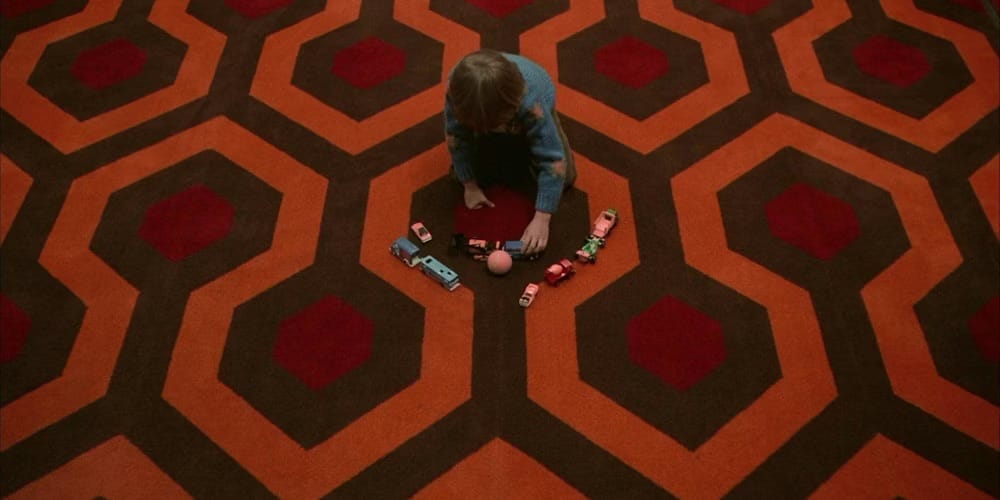
Stanley Kubrick’s The Shining (1980) is so embedded in popular culture—probably now more so than ever—that it seems impossible to experience the film afresh, as if for the first time. Yet that was exactly how it felt watching it on the big screen for its 45th-anniversary re-release.
There is certainly something profoundly mysterious about the way the film exists so securely within its own time and space that you could almost believe nothing existed before you entered the cinema, and that nothing exists after it ends, as the sound of Al Bowlly’s vocals echoes like a ghost in your brain while you stumble toward the exit—into an uncertain rebirth from the horrors that have unfolded in the Overlook—just as one might imagine Jack Torrance has done time immemorial, devil incarnate.
Modigliani's Red Riding Hood
The first thing that struck me watching this most recent time on the big screen was the sheer magnificence of actress Shelley Duvall’s Modigliani-style face, which becomes so utterly fascinating to study throughout the film that it gives even the iconic opening helicopter shots of Montana’s Glacier National Park and the Overlook Hotel exterior in Oregon a clear run for their money. Having only watched the film at home, I had never fully appreciated the director’s decision to cast this unusual, almost cartoon-looking woman in such a demanding and tortured role, but seeing her performance on a larger screen made it blindingly obvious.
Duvall is a perfect visual contrast to Jack Nicholson’s arch, pantomime-villain turn as Jack Torrance, with her Disney eyes and Little Red Riding Hood naïveté. Wearing a catalogue of costumes throughout the film, I also came to appreciate just how well she carries each exquisite look provided by costume designer Milena Canonero—from the domestic blue plaid apron she wears in the kitchen, to the yellow wool jacket and blue denim she wears while walking the grounds of the Overlook, to the famous brown dungaree dress worn over a checked shirt in the scene where her husband Jack is set to attack her with a baseball bat.
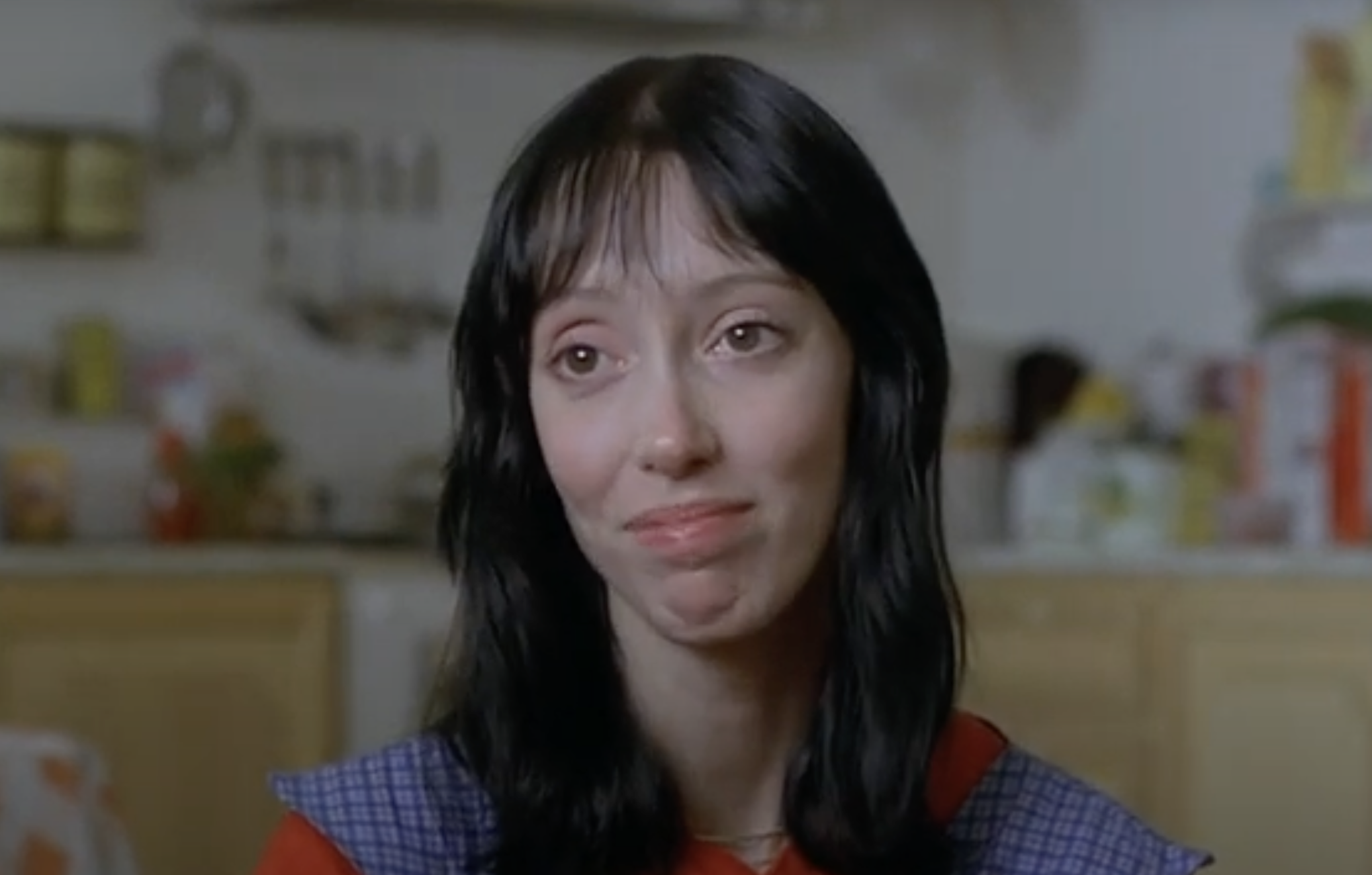
The Texas-born actress has such an expressive face that she would be almost as effective in a silent, German expressionist movie. As an experiment I suppose you could turn down the volume and watch the performance without hearing dialogue to see how effective it plays but that would negate the second most phenomenon thing I noticed this time watching it at the cinema.
Sound.
The Uses of Enchantment
Equal to the visual storytelling in The Shining is Kubrick’s sound design and musical selection. It is as iconic as the film’s most famous frames: the sound of Al Bowlly’s Midnight, the Stars and You drifting down empty hotel corridors; the disturbing wail of the chorus from Penderecki’s Utrenja, which sounds like a thousand holocausts carried out at once; and Wendy Carlos’s electronic variation on Dies Irae accompanying the swooping helicopter shot beneath the opening titles. Together, these elements combine to create an indelible nightmare of musical associations and engrams for the viewer.
Kubrick was a master at selecting the perfect soundtrack for his films. One need only think of the ironic use of Vera Lynn’s We’ll Meet Again at the end of Dr Strangelove, the mesmeric carousel melody of Strauss’s The Blue Danube in 2001: A Space Odyssey as a space shuttle docks with a biscuit-tin-shaped space station, or Beethoven’s Ninth Symphony electronically processed in A Clockwork Orange as torture device, to recognise his genius for matching music to image.
The Shining is no less impressive than these earlier examples, but here the music buries itself into the psyche in an even more disturbing way. Jagged shards of musical phrases by the likes of Penderecki and Ligeti cut through the isolating atmosphere like kitchen knives, reminding us that multiple layers lie beneath the surface of the Overlook. These layers suggest demons, dark forces, and violent crimes that have all played out in this hellish realm—one in which Jack, Wendy, and Danny Torrance must now contend with the psychological effects that ultimately shape their lives.
Burnt Toast
"When something happens, it can leave a trace of itself behind. Say like if someone burns toast. Well, maybe things that happen leave other kinds of traces behind... things that people who shine can see". - Dick Halloran (The Shining)
The more I revisit The Shining, the more it reveals itself as a fairy-tale horror. The Big Bad Wolf here is Jack Torrance, who even threatens to “huff and puff and blow your house in,” while the Hansel and Gretel-like innocents, Wendy and Danny, must escape the witch’s house—here, a remote hotel in the Colorado mountains.
What’s more, the oedipal struggle between Jack Torrance and his son Danny, played out in the name of protecting Wendy, becomes more apparent with each viewing. As Jack attempts to write his novel, his imagination grows increasingly enamoured with the spirits surrounding him rather than the words on the page. Meanwhile, Danny absorbs attack after attack on his psyche as premonitions and images of the past flood his mind like the deluge of blood pouring from the Overlook’s elevators.
Throughout the film, we lose our sense of time and direction, becoming trapped within the labyrinthine maze of the Overlook itself, mirroring the outdoor maze that Wendy and Danny explore earlier in the film. When Jack roars in primal fashion through the icy maze in pursuit of the son he intends to murder at the film's clim(axe), he becomes the werewolf, the Minotaur, and the axeman all at once. Eventually frozen in time, the karmic cycle is broken by Danny and Wendy, who escape what once seemed their inevitable demise at the hands of the beast that lured them there as easy prey.
The influence of Bruno Bettelheim’s The Uses of Enchantment is unmistakable, and both Stanley Kubrick and his co-screenwriter Diane Johnson leaned heavily on his extensive work and analysis of fairytales for inspiration.
Perhaps this explains the timelessness of The Shining—why, even after forty-five years, its mystery endures and continues to intrigue audiences beyond the relatively straightforward surface narrative.
Ironically, the original author of the novel upon which Kubrick based the film famously despised the adaptation. Perhaps this was because, as a storyteller who preferred to have everything neatly wrapped up by the end of his books, he was unsettled by Kubrick’s refusal to provide clear answers—by leaving gaps, ambiguities, and uncertainties that remain long after the film's final image.
It is precisely within those uncertain spaces—those dark corridors of the imagination—that Kubrick triumphed, surpassing the original author's "burnt toast" and creating a truly timeless masterpiece.