PUNCH DRUNK

RAGING BULLY
Middleweight boxer Bernard Hopkins’s ring-walk entrance a few days after 9/11, set to Ray Charles’s America the Beautiful, offered a powerful symbol of New York City’s indomitable spirit at the time. Wearing his signature wrestling mask, he stood before the crowd like a Big Apple spirit demon, summoning the energy of the streets straight through into his gloves.
Ye’s comeback album Bully feels somewhat similar to Hopkins’s ring walk, except the “9/11” for the artist formerly known as Kanye West was a deeply personal crisis that played out publicly on Twitter through a marathon splurge of forbidden tweets, as well as a few scandalous surprise drops, tracks touching on themes of incest and Adolf Hitler. Whatever prompted his online and musical meltdown, it was clear that here was a man burning nearly every bridge available to him, like an online equivalent of seppuku, including, for a brief moment, his wife Bianca.
Thankfully, Ye’s Twitter storm eventually subsided, as he, like Icarus, seemed to finally collapse from the heat of the sun, or the internet, with wings burned and image impaired. And yet, none of his true fans believed that would be the end of him, though the more practical concern of how mood-stabilising drugs might affect his genius remained.
In exile, post-meltdown, wandering the cities of the world like Caine in Kung Fu, one wondered whether this was a pilgrimage of repentance for the artist formerly known as Kanye, or an attempt to avoid catching fire from those he had injured during his manic episode.
But genius talent such as he possesses invites forgiveness, especially among his long devoted fans, who have lived through all the artist's psychodramas through thick and thin. It is a mostly unconditional arrangement, though some might call it a cult of personality. Still, there is a reason fans from all over the world accept the trade-off. Loving the work of Kanye means enduring the low lows to enjoy the high highs. The man still creates music like no other major commercial artist right now. He is, for us fans, our bipolar navigator through the increasingly fragmented 21st century, where insanity is more relatable than ever and our hope for his redemption is the hope for our own.
More average artists than Ye would suffer from the law of diminishing returns, returning to the creative well so often in an attempt to produce magic every time they record in the studio. But in Ye’s case, he can seemingly do no wrong, owing to his Midas touch when it comes to making records and to the fact that his entire discography functions as a sprawling mega-diary, charting his course from The College Dropout (2004) to Bully (2026). Even attempting to isolate one album from another is almost impossible, as Ye self-references his own eras and biography like he is the ultimate open book, his story playing out with near-total transparency and exploring themes like that of a great Shakespearean play, full of ghosts, hubris, grief, triumph, and arrogance.
At this stage of his two-decade career, Ye has transcended the opinions of critics. So devoted is his worldwide fanbase that any criticism is rendered almost meaningless. The genius of tying each album's launch to a significant chapter in his life's biography is that it feels both immediate and rooted in its moment, while also serving as yet another distinct panel in the larger tapestry of his colourful artistic canon, with each project carrying its own unique vibe and significance.
BULLY IN SILK PAJAMAS
"It’s tough to get out of bed to do roadwork at 5 a.m. when you’ve been sleeping in silk pajamas," - Marvin Hagler
Bully is a greatest hits album with no actual greatest hits from Ye's back catalogue, instead featuring entirely new tracks that borrow from each previous incarnation of Ye, from his college-era trilogy to his heartbreak and twisted fantasy period, to his more recent Vultures crash-out era. It’s a summation of all he’s done up to this point, yet it teases the promise of a new phase, one that may need to reconcile the dichotomy of man and machine, as Ye's part-auto-tune, part-robot identity, like his never-quite-finished albums, becomes increasingly Schrödinger-like, a half-lived, half-dead phantom, the ghost in the machine, or, as Professor Skye refers to it in his latest YouTube video on Bully (see link below), a "simulacrum," an imitation of the real thing.
There is a definite sense of melancholy that sits at the heart of Bully, a sort of half victory lap, half apology tour in equal measure, a shelter from recent storms. Personally I like the slight softness (some might call it flatness) of Ye's latest record for it suggests a surprising humility for the artist famed for his collosal ego.
Perhaps the old Kanye might have turned in a double album, where the first side of the album dealt with his destructive Venom-style mania, including controversial tracks such as WW3, Cousins, and Heil Hitler that got him into hot water on social media platforms, and the second side serving as a redemption arc, featuring All the Love, Highs and Lows, Preacher Man, and Beauty and the Beast. It would have been great to have an audio bipolar express that conveyed the full extent of the sinner/saint paradox of Ye, but maybe we've been there before.
It's been a long time coming
It's a few things I'm overcoming
What we have instead with Bully, at least as it stands in its current form, is a more subdued Ye, one who sounds like a veteran boxer whose returned to the ring after a hiatus, battle-weary from the slings and arrows of his own outrageous fortune. And who can blame him? He’s been carrying culture on his shoulders for two decades now, blazing a trail at every turn and to some cost to his mental well being and no doubt physical too.
And that's surely fair enough, at the age of 48, he's most likely ready to move into a new, less volatile paradigm. After all, the world is crazier than Ye now, and perhaps the most subversive punk thing he might do is go straight and narrow with his themes, tone and messaging, finally resolving his equilibrium in a world where chaos rules.
Although, honestly, who would bet on where Ye goes from here?
You want me working on my messaging
When I'm thinking like George Jetson
But soundin' like George Jefferson
Then they questionin' my methods then
If you tweakin' out my texts again then I don't get reception here
I got the mind state to take us past the stratosphere
I use the same attitude that done got us here
I live for now, I don't know what happen after here
I live for now, I don't know what happen after here
Plus, what was meant to be was meant to be
Even if, publicly, I lack the empathy
I ain't finna talk about it, 'nother four centuries
One and one is two but me and you, that's infinity
LITTLE BULLIES
We wasn't supposed to make it past twenty-five
Joke's on you, we still alive
Throw your hands up in the sky and say
"We don't care what people say
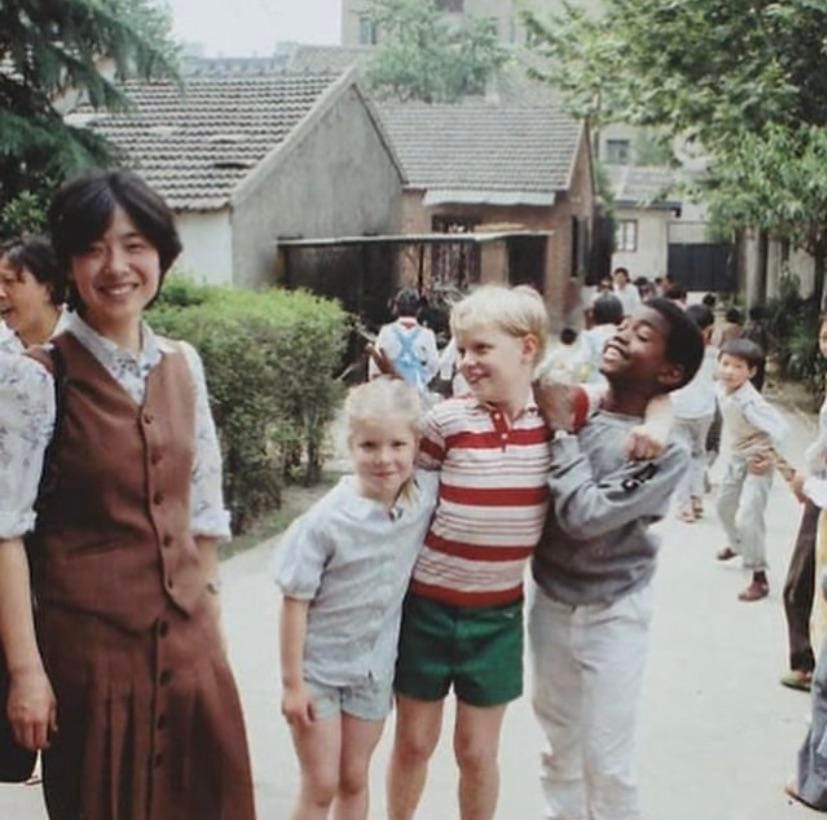
I keep seeing clips of Chinese children’s choirs singing Ye songs in their school classrooms on social media, and it’s so funny to think of this hugely polarising figure in the West being so adored by a younger generation of kids in the East. Ye himself spent time in China as a young boy when his mother taught at Nanjing University for a year in the late 1980s. Attending school there, there’s something beautifully circular about Chinese schoolchildren now singing his songs every day.
Perhaps these feel-good optics point to a future where Ye's positive influence through his art provides cover for his controversies and encourages him to be more a leader of light than of shadow.
We may never know to whom Bully refers in the album’s title, but it could just as easily be the artist who has to bully his way to the top of the creative industries, the bullies who try to suppress the artist for exercising his freedom of expression, or those playground bullies who grow up into something far more insidious in adult life, wielding power in high places.
In Ye’s case, the lines blur. He is at once the bully and the bullied, the one who provokes and the one who absorbs the backlash, caught in a loop where power and persecution feed into one another. The media machine, the fans, and the critics all play their part in this ecosystem, where outrage is currency and attention is oxygen.
Perhaps Bully is less a statement and more a mirror, reflecting a culture that rewards excess, punishes raw honesty, and then consumes the fallout as entertainment. If that is the case, then Ye is not just the bully, or the bullied, but the most visible symptom of a system that thrives on both.
In the end, there’s no doubt this is a project with considerable heart and a cosmic tenderness throughout that contradicts the title of the album itself.
After all, what are bullies but people crying out of the darkness for love?