TALKING TALK BOX
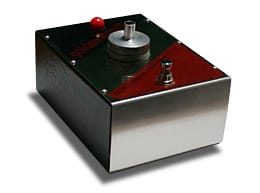
Demolition Man
My first experience of hearing a Talk Box came when I had the opportunity to listen to my late second cousin, Steve Waller (who I always thought of more as an uncle due to his being much older than me), a talented musician who had worked as a session musician, featuring on the Gonzalez track Haven’t Stopped Dancing Yet, before joining the Manfred Mann'S Earth Band as a guitarist and vocalist. As a solo artist, he recorded a reggae version of Hey Joe for Energey Records in 1981, and when I heard a radio broadcast of it on a cassette my father played me, I found the robot-sounding vocals intriguing and unlike anything I had heard before, like a musical Darth Vader.
Years later, when I spent time with Steve during his stay with my family and me in Gloucestershire, he often expressed his love for Stevie Wonder and introduced me to one of his favourite albums, Talking Book, which featured an effective use of the Clavinet and Wah Wah Pedal effect that seemed, to my ears, to correlate with the Talk Box.
The main difference between the Clavinet and the Talk Box is that, although they share a similar concept of speech-like sound in music, the Clavinet is achieved primarily through instruments and effects, whereas the Talk Box uses an instrument routed via a tube into the performer’s mouth, creating a unique, alien-type sound shaped by the lips and tongue.
An effective demonstration of the Talk Box can be seen in the link below, where Steve alternates between his use of the device and unaltered vocals in Manfred Mann's Earth Band’s single Don't Kill It Carol from their Angel Station album, which will have further significance later.
Golden Throat
The most famous practitioner of the Talk Box, however, was Roger Troutman, whose idiosyncratic approach to the voice-altering device with his band Zapp became the benchmark reference for everyone who came after him. Using a combination of a simple synth patch with a Moog Minimoog, a custom-modified Golden Throat Talk Box, and his inimitable mouth technique, he created what is known today as the iconic Zapp sound, famously used on the track California Love, a collaboration between Dr. Dre and Tupac Shakur.
Family Business
More recently, André Troutman, cousin to the late Roger Troutman, has carried on the Talk Box lineage, contributing its use to modern R&B and hip hop, most notably on Kanye West’s latest album Bully (2026), where songs such as “All The Love,” “I Can’t Wait,” and “White Lines” utilise the device/technique to devastating and cosmic effect.
It makes sense for Ye’s collaboration with Troutman, as his own use of auto-tune (pitch correction software) on his iconic 808s & Heartbreak album advanced the potential for voice and machine to merge while still creating something emotionally authentic. Having previously used vocoder (synth voice pattern program) on his hit single “Stronger” from the album Graduation, which sampled Daft Punk's Harder, Better, Faster, Stronger, it was 808s that established Ye's signature approach to electronic-sounding vocals.
Although he took some initial flak for his use of auto-tune, time has proved that Ye turned the process into an art form, knowingly using the combination of digital fragmentation and human vulnerability to achieve a new type of sound. Songs such as “Say You Will,” “Heartless,” and “Love Lockdown” demonstrate this to remarkable and often subtle effect. This is a long way from Cher's “Believe.”
Two years after 808s, on another iconic album, My Beautiful Dark Twisted Fantasy (2010), which included Ye's most beloved track, “Runaway,” the artist formally known as Kanye expanded on his use of auto-tune by adding heavy distortion, creating a disturbing and emotionally resonant impact that sounds like a robot Frankenstein having an emotional breakdown.
In fact, it was on My Beautiful Dark Twisted Fantasy that I remembered hearing “So Appalled,” featuring a sample of a track from Manfred Mann's Earth Band’s Angel Station entitled “You Are, I Am,” which my cousin Steve had played on.
Now, as I reflect on catching up with the history of the Talk Box, I find a family connection between Troutman, Ye, and my cousin Steve.
Of course, there’s a bigger discussion about the symbolism of this fusion of voice and machine, deployed through talk box, vocoder, and auto-tune, as a harbinger of our current AI age and the challenge of distinguishing authentic human emotions in increasingly artificial collaborations.
Thankfully, with pioneers such as Troutman and Ye finding the balance between the real and the unreal, I believe they will continue to yield some fascinating results for us all to enjoy.