THE ICE COMETH
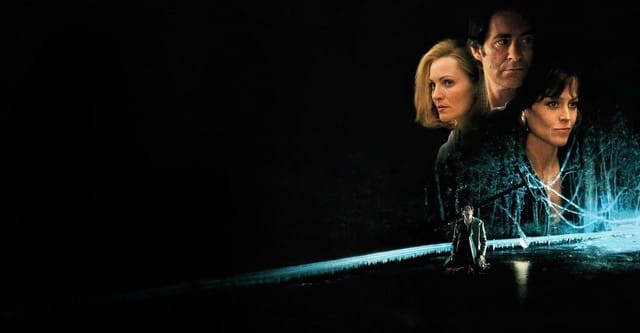
I’ve been watching quite a bit of YouTube weather coverage (notably Ryan Hall, Y’all) covering the current deadly winter storm in America, and it seemed as good a time as any to revisit Ang Lee’s 1997 masterpiece The Ice Storm, based on the 1994 novel by Rick Moody.
Aside from the parallels with recent bad weather, the film perfectly captures the collective hangover from 1960s America, as the retreat from hippie “free love” promiscuity in the fields of Woodstock and beyond now hides itself behind the closed curtains of private homes in the suburbs of Connecticut. The seedy prominence of a “key party” in the film illustrates how the free-love movement has been gentrified and appropriated in the form of a dinner-party game that bored, cocktail-swilling married couples play to keep their lives interesting. And while characters such as Ben Hood (Kevin Kline) and Janey Carver (Sigourney Weaver) continue to desire the temptation of sexual liberation, they fail to see the moral contradiction in their illicit games—particularly in relation to their children—at a time when President Nixon, as the story is told, is being investigated for Watergate. They’re hypocrites, and the price they pay for that hypocrisy is, by the end of the movie, seismic.
But what truly impressed me about the film on rewatch was the perfection of its costumes (Carol Oditz) and art direction (Mark Friedberg). It places you right in the heart of the 1970s aesthetic, from the clothes to the Eero Aarnio Ball Chair, to the use of the chilly-looking Spotts house by architect Richard Henderson. So many of the characters on-screen have the genuine, real-life look of those late-1960s and early-1970s double portraits by David Hockney, right down to the smallest details, like the oversized glasses the actors wear and the perfectly judged amount of trouser flare.
It’s truly a crime that this film received zero Oscar nominations in 1997, as I believe it could easily have run away with practically all of them, including Best Picture. This is some of Ang Lee’s best work as a director, and it sits comfortably alongside his other masterpieces:Eat Drink Man Woman, Crouching Tiger, Hidden Dragon, and Sense and Sensibility.
By the end of the film, one has a feeling similar to that of a great Mozart opera, in which the characters’ flaws reveal their true humanity and, though it comes at great cost, we are relieved that their icy repression has finally thawed into something more profound: an understanding of the true value of family. This idea is perfectly expressed through Paul Hood’s (Tobey Maguire) comic-book metaphor involving the superhero family Fantastic Four, which he applies to families in general—
and, of course, his own.
Paul Hood: [narration] In issue 141 of the Fantastic Four, published in November, 1973, Reed Richards had to use his anti-matter weapon on his own son, who Aannihilus has turned into the Human Atom Bomb. It was a typical predicament for the Fantastic Four, because they weren't like other superheroes. They were more like a family. And the more power they had, the more harm they could do to each other without even knowing it. That was the meaning of the Fantastic Four: that a family is like your own personal anti-matter. Your family is the void you emerge from, and the place you return to when you die. And that's the paradox - the closer you're drawn back in, the deeper into the void you go.