THE MOUNTAIN
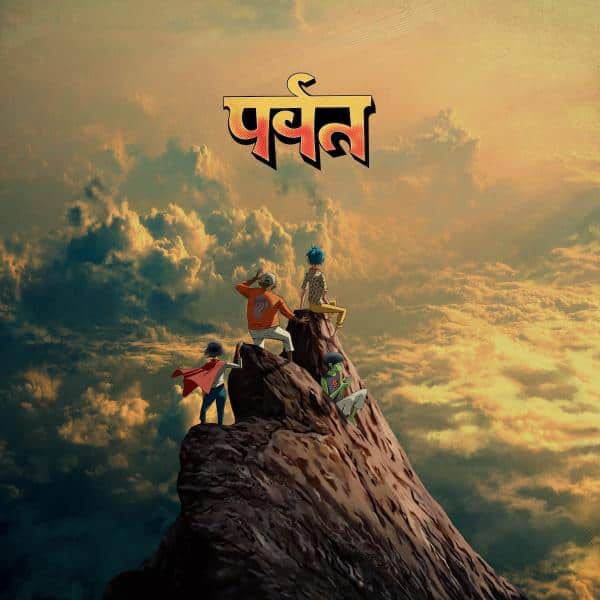
Damon Albarn has always been an artist I love to hate and hate to love. On one hand, there’s no doubt he comes up with some amazingly catchy melodies, but on the other there’s the wearisome, middle-class, Guardian-reading angst of his worldview, so lacking in mystery or poetry. In many ways, he’s the miserabilist Ray Davies of his generation, except Ray Davies had wit where Albarn has none. He’s a creative literalist, except when he attempts to be mystical, at which point the effect can be a bit like watching someone try to draw a fresco with a crayon. Nevertheless, he does have fleeting moments of depth and genuine sincerity, and so, when I heard that the latest project with his cartoon band, Gorillaz, dealt with themes of death and reincarnation, I thought I’d give it a spin.
Back in 2024, after making an exploratory trip to India for creative inspiration with his long-time Gorillaz collaborator Jamie Hewlett, Albarn lost his father, Keith, an architect and designer. Ten days later Hewlett lost his father, and much of their shared personal grief for their fathers informs the thematic idea behind The Mountain.
The album itself is constructed as a kind of pop-fusion meditation on the interconnectedness and transmigration of people and souls in this life and the next, a transcendental séance between the living and the dead, with previous Gorillaz collaborators who have since passed away appearing as cameo features. It's a great idea, and yet the cynic in me can’t help feeling that, especially in this age of spiritual crisis in the West, the last thing we need is dope-smoking Gen Xers seeking further cultural appropriation abroad to offer a salve for their own superficial spiritual void, when they might actually find it, like Dorothy in The Wizard of Oz does in Kansas. That would be verboten, of course, because Albarn hates anything to do with where he comes from, quite unlike Ray Davies and his band The Kinks, who championed their country all the while having the emotional intelligence to despair at its cultural and spiritual decline.
Of course, I'm being a bit of a hypocrite taking a dig at Albarn, because my late father was hugely influenced by Eastern philosophy and Buddhism, and I still play his favourite album by The Incredible String Band, 5000 Spirits or the Layers of the Onion, which was fairly groundbreaking back in the 1960s for introducing sitars and other Eastern instruments into their unique brand of experimental folk. I didn't judge their music—or him—for their respective spiritual odysseys, quite the opposite, and yet my sense with Albarn is that his attempt at finding similar meaning is far more of an affectation. He would seek spiritual refuge anywhere but his own backyard. There's nothing wrong with that, but so often I find there's a progressive form of cultural appropriation with these musical nomads which reminds me of a kind of colonisation through pop music. This is compounded by Hewlett's deliberate referencing of Disney's The Jungle Book aesthetics for the accompanying videos for the album, which come from a place of affection but contain the spectre of Rudyard Kipling, famously accused of championing colonial subjugation. That notion and comparison would probably horrify Albarn and co. if they thought of it that way. Though I mean, if Paul Simon could get accused of cultural appropriation and exploitation with Graceland, not to mention Peter Gabriel and Sting with their world music projects, then surely he should withstand some similar scrutiny in this regard.
He won't, of course, because Albarn is the emblem of globalisation in pop. As much as he resisted the siren call of Blair and New Labour when they first came into power in 1997, Albarn is the same as them: an internationalist who ultimately wants to reduce native cultures to a kind of soupy mess.
Nevertheless, some of the tracks on here are beautifully constructed, especially the title track, which reminded me of “Pi’s Lullaby” from The Life of Pi soundtrack, composed by Mychael Danna.
And let me be clear. Everyone is free to seek meaning wherever they find it, climbing their proverbial mountains. The question is though: have they even left base camp when they reach the summit?