THE NIGHTS BEFORE THE WORLD CHANGED
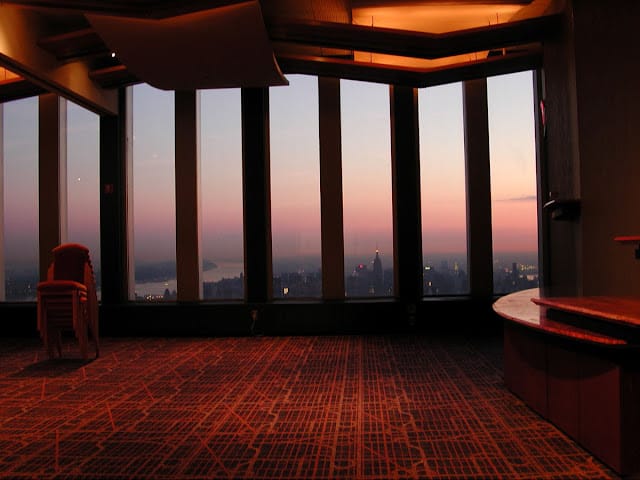
There are atmospheres, real and imagined, that haunt the mind in strange ways, like the faded photographs of the Titanic docked in Southampton before its ill-fated departure, or the eerie interiors of Stanley Kubrick's The Shining, where the Overlook Hotel’s labyrinthine corridors seem endless and the ghosts of the past linger like phantoms.
Looking at the photographs by Polish electrician Konstantin Petrov, who had been working on the North Tower of the World Trade Center just prior to the events of 9/11, fills me with a similar sense of dread and familiarity, as if I am inhabiting those spaces during those long NYC summer nights before the world changed. I had, in fact, been in those very spaces two years prior to 9/11, visiting New York for the first time with my friend Niall. It somehow felt personal to me when they were destroyed, though I had only been there as a tourist, and I felt a premonition of doom for the barely arrived century ahead almost immediately as a result of their collapse like a foreboding overture.
From June 2001, Petrov, from Estonia, worked nights at Windows on the World (the restaurant at the very top of the North Tower), which gave him ample opportunity to photograph the empty interiors at night and sun-infused vistas in the early dawn—moments denied to the general public. In his own way, Petrov was king of the world in his own out-of-hours kingdom. There is something poetic and eerie about his taking advantage of those nocturnal hours to indulge his love of photography one hundred floors high.
He captured everything from the restaurant itself to light fittings and, in one almost surreal Lynchian photograph, a row of chairs stacked on top of one another silhouetted against a burnished sunset sinking behind the surrounding city skyline.
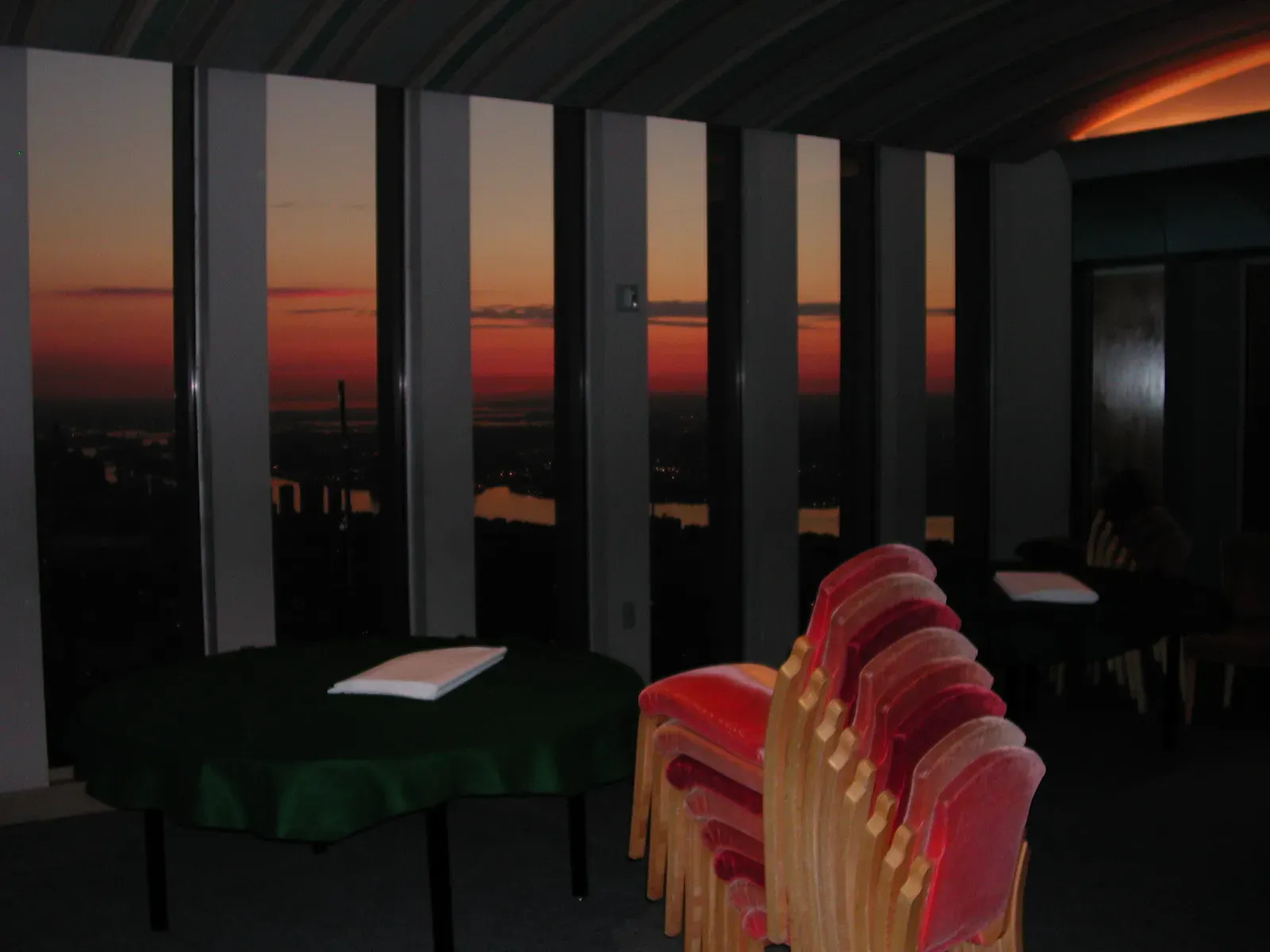
Petrov's pictures were miraculously discovered in the summer of 2014 by documentary filmmaker Erik Nelson and his team of researchers. They had been working on a 9/11 project for National Geographic. Though there were plenty of exterior shots of the buildings, Nelson was keen to find photographs of the interiors to convey what the towers looked like inside before they were destroyed. So desperate did Nelson become in trying to locate archival images that he nearly abandoned the film, until a member of his team stumbled upon Petrov's collection of World Trade Center photographs on an Estonian website called Fotki, designed for photo sharing.
In Nick Paumgarten’s 2014 article “Take Picture” for The New Yorker, he describes Nelson as having “felt as though he had stumbled on the tomb of King Tut. For whatever reason, this Petrov had turned an archivist’s eye on the banalities of an office building and a sky-top restaurant, which, though destroyed in one of history’s most photographed events, had hardly been photographed at all. The pictures were beautiful, too. Devoid of people, and suffused with premonitory gloom, they made art out of a site that most New Yorkers, at the time, had come to think of as an eyesore. Petrov seemed to be a kind of savant of the commonplace, as though he’d known that all of it would soon disappear down a smoking pit. Inadvertently or not, he left behind a ghostly record, apparently the only one, of this strange twentieth-century aerie, as though he’d been sent here for this purpose alone.”
There is certainly something profoundly disquieting about the feelings Petrov's WTC photographs evoke in me, as I look at them—almost as if I am holding my breath at the prospect of what is to come, while knowing that nothing can alter the tragic course of history that unfolded that September morning at the start of this uncertain century.
They stir a melancholic sensation similar to how I feel watching that poignant video of the last NYC sunset recorded on December 31, 1999, the final evening of the twentieth century, just hours before the new millennium. It’s a clip that often circulates on social media, like a flashback to a not-so-distant past that you vaguely remember but can never experience again—something akin to a human disintegration loop.
These carousel-like Time Machine reminders disturb us because they carry the weight of decades in mere seconds.
Perhaps we all become ghosts sooner than we think, witnessing the past almost as if it were another life, while being propelled further into the future with no time to properly look back.