TWILIGHT OF THE KING
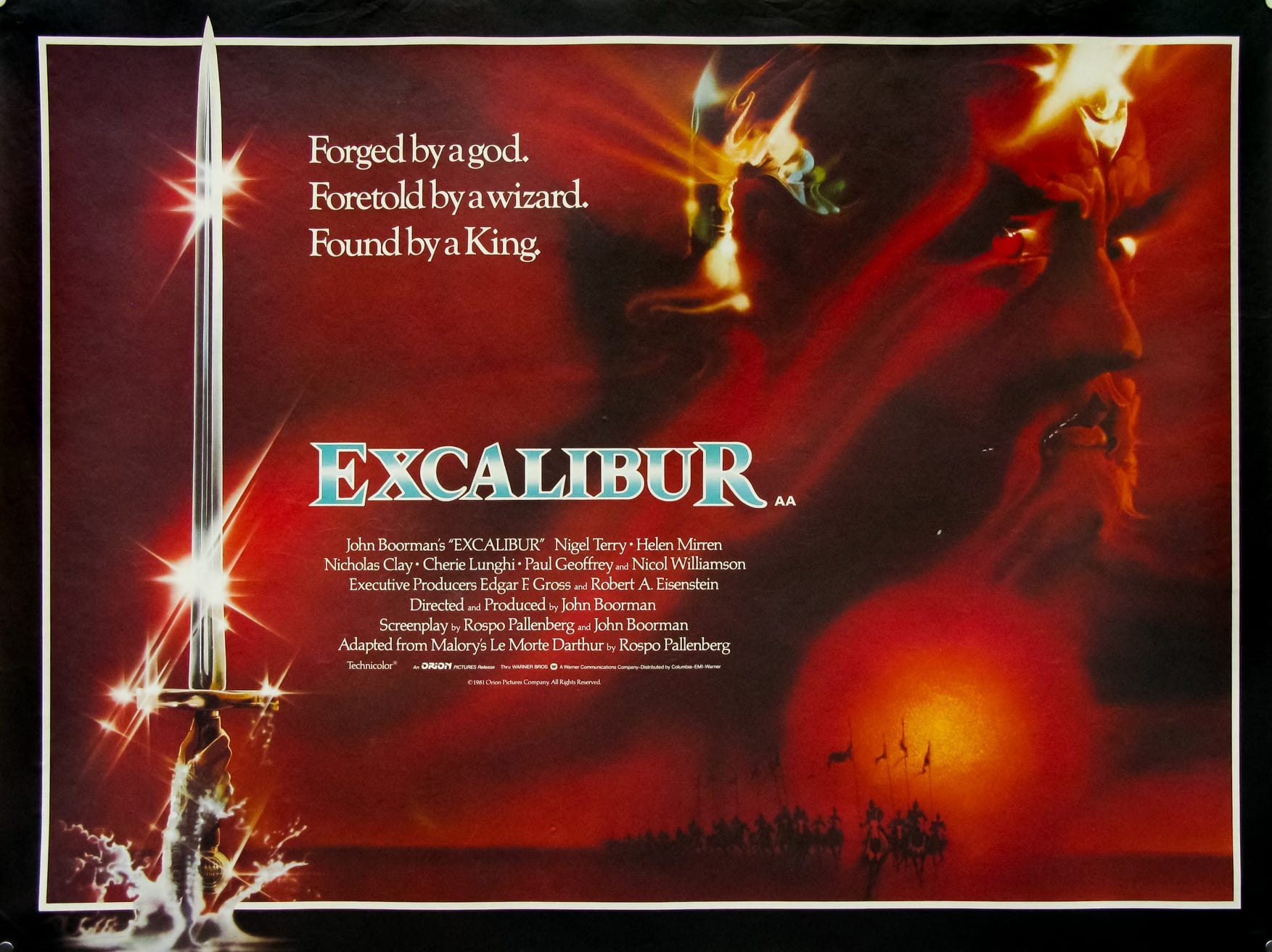
Given that our current king is the epitome of a man who is perpetually not one with his people or the land in which they live, it's worth being reminded of what the legend of King Arthur is all about: a king who at his best delivered a fertile, prosperous and united kingdom, and at his lowest (through betrayal and a malaise of moral uncertainty) a barren and lifeless one.
King Charles III has only ever seemed to bring about the latter as a monarch, unlike King Arthur, who even at the lowest ebb of his reign still passionately desires nothing more than to return his people to the glory of the brief paradise of Camelot's rule once again.
Arthur's story is of a king born amongst the woods, lakes and fields of England, who so comprehensively understands the land upon which he treads and the people who inhabit it that his victories and losses are as symbiotic to them all as if they were one organism.
Such ideas of cohesion would frighten people today, especially in this hyper-fragmented age of identity politics, but as a fantasy of a mythic ideal, one that reappears from time to time like Greek fire, that dream of deep England is pretty unbeatable and certainly explains its enduring popularity in endless books, films and music.
Back when I was a kid, alongside the desire to be a Jedi Knight, Indiana Jones or a Hobbit, there was always the great desire to be a Knight of the Round Table serving under King Arthur’s court. Mixed alongside my Star Wars figures in the toy box were knights on horses secured to metal bases, which I organised into a cavalry awaiting some mythic battle. In fact, I even had a castle with a moat and placed archers on the turrets to ward off any approaching threat from an invading army. My play scenarios were inspired, no doubt, by a Ladybird early learning book on King Arthur and the Knights of the Round Table.
It was a good introduction to the deep lore of England that I later found a greater connection to via Walt Disney’s The Sword in the Stone (1963) (based on T. H. White’s The Once and Future King (1958)), Lerner and Loewe’s Broadway musical Camelot (1960) (a favourite of JFK’s), and perhaps most indelibly, John Boorman’s Excalibur (1981), which on my first encounter seemed noticeably darker and more ominous than the previous variations on the legend of King Arthur.
The sword of Excalibur too had become a significant motif for me as a young boy, thanks in part to my wizard-seeming father encouraging me to name cricket bats and guitars after the mythic sword to ensure greater mastery of sport and music. Perhaps I didn't become as legendary as Arthur with my wooden bat and acoustic guitar, but the symbol of what Excalibur represented has remained indelible ever since those early days.
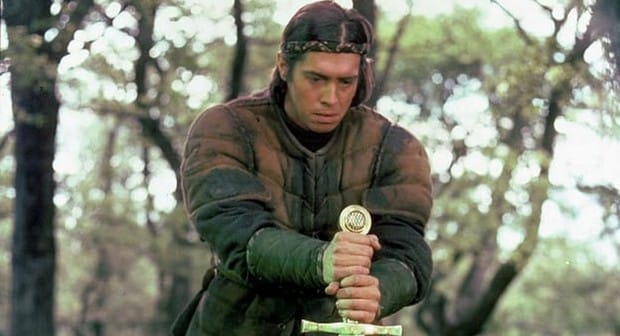
Just the other night, I decided to rewatch Boorman's idiosyncratic fantasy masterpiece Excalibur with my brother and, sitting there amazed by the masterful handmade production (no CGI in sight), with light reflecting off shining armour and deep crimson sunsets, I was taken back to a place of deep childhood where the likes of Robin Hood and King Arthur felt like timeless protectors of the land all around us. Though they were centuries old, there was the feeling they might just reappear at any minute while we were walking along overgrown hedgerows and through sun-dappled woods.
Memories of reading an illustrated book of Sir Gawain and the Green Knight came flooding back to me, as did my first ever reading of Wolfram von Eschenbach's 13th-century tome Parzival (c. 1200–1210), which was further enhanced at the time by playing the Richard Wagner opera of the same subject, Parsifal (1882), to accompany my learning of the Red Knight.
Watching Boorman's Excalibur as an adult now, and not as a child, the film appears to possess a much deeper meaning than I originally suspected. Themes of alignment with nature and fellow man, fidelity, truth and honour all came to the forefront, along with the inescapable desire to imagine a dream of England that is far more noble than the current situation on display, a bizarro world where truth is criminalised and deceit is rewarded. One could almost believe that the country has been cast under one of Morgana's insidious spells.
And reflecting on the wounded Fisher King (Arthur in Boorman's movie), I couldn't help but think of my late father as a reflection of that tale when he became gravely ill, and how that story has found many iterations in popular culture, most famously in Spielberg's Indiana Jones and the Last Crusade (1989) and Terry Gilliam's The Fisher King (1991). In Spielberg's film, it's Indiana Jones who has to rescue the Grail to heal his wounded father; in Excalibur it is Parsifal (the holy fool), and for me it remains an endless quest to find an answer to a question that is forever a riddle.
What does suffering ultimately teach us?
Sitting watching Boorman's movie with my brother and reflecting on the passage of time since we played with toy forts and knights on horses, and all the precious things we'd lost in between, I couldn't help but reflect that it was in the absence of the Grail that we found the Grail itself.
A feeling that all was not lost.
Not even our own king, our father, who was both Merlin and Arthur combined.
And who knows, perhaps even Excalibur awaits somewhere in the form of a cricket bat or a guitar, just waiting to be picked up for the great dream of England to be reawakened once more.
Happy St George's Day!
Digital Renegade
23rd April, 2026