JOE AND BETTY
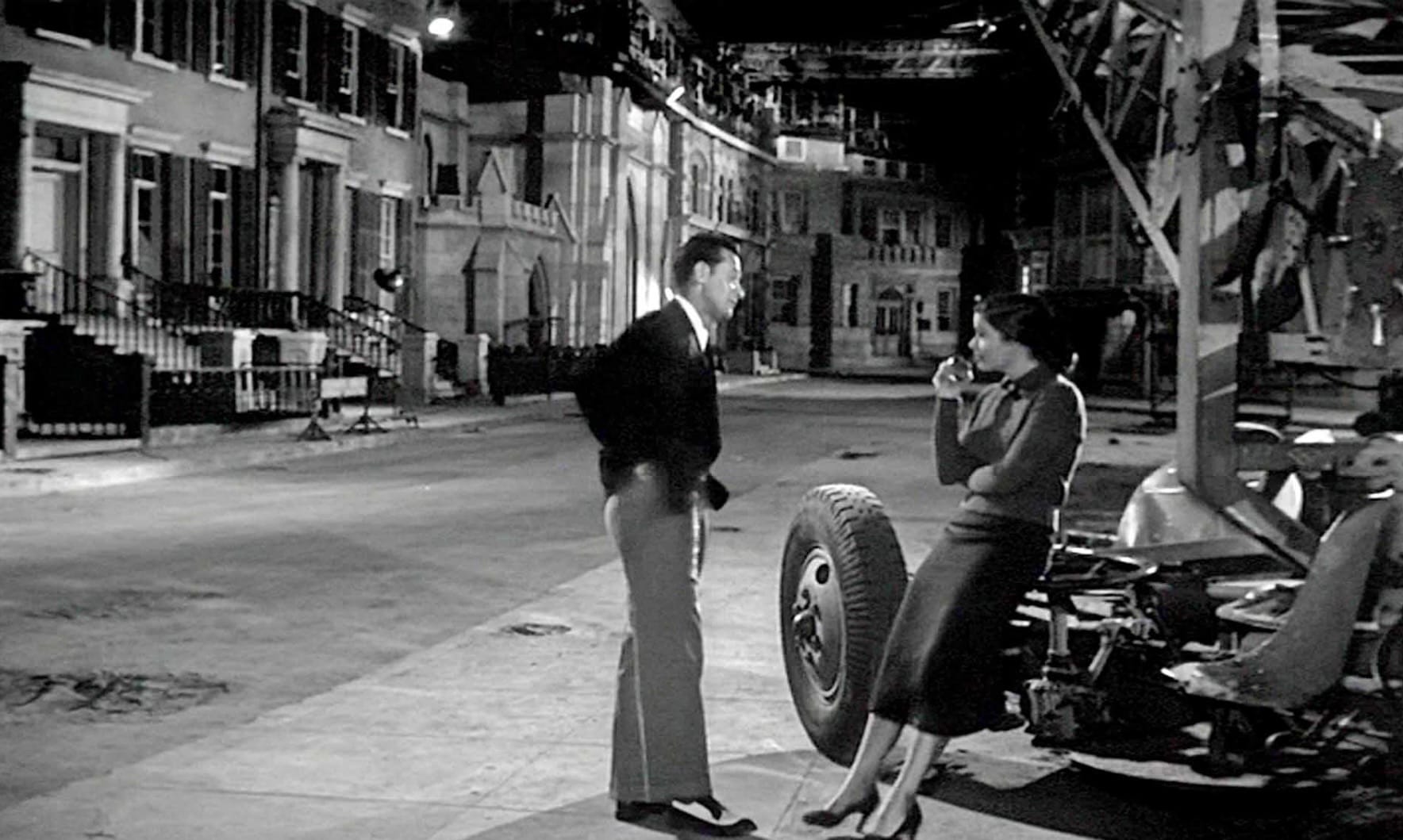
In a parallel universe of Billy Wilder's Sunset Boulevard (1950), screenwriter Joe Gillis (William Holden) and part-time collaborator and potential love interest Betty Schaefer (Nancy Olson) would most likely have ended up married with kids, their dreams of sharing Best Screenwriting Oscars long put away in exchange for a more humble, small-town life in Dayton, Ohio.
And they might well have been happy in this hypothetical scenario, just as long as Joe didn't develop a Chuck Tatum-like itch to return to his Hollywood dreams. Tatum, the ruthless journalist played by Kirk Douglas in Wilder's Ace in the Hole (1951), is perhaps a warning sign of what could happen if Joe's ambitions ever resurfaced. Likewise, Betty might eventually have grown tired of dampening down her own writerly ambitions in favour of a quieter, domestic life.
By the time Joe finally decides to break things off with Betty in a showdown at the Sunset mansion, where he has been living as a playboy screenwriter in the employ of ageing silent-movie star Norma Desmond (Gloria Swanson), he has already accepted that he is finished in Hollywood. He knows that the one last noble thing he can do is break up with Betty so that she can return to her honest-to-goodness art-director fiancé, Artie (Jack Webb).
The moment Joe decides to do the honourable thing, not at the altar, but at the shrine of Norma Desmond, her mansion, is the moment he is freed from his own self-imposed imprisonment, from the Hollywood dream to which he has become bound. Of course, by the time he acts decisively to turn his back on Betty, Norma and Hollywood, it is too late. He is shot dead and falls into his swimming-pool grave, where he remains suspended in a type of watery womb, narrating the events that led to this deadly moment.
I sometimes lament adopting Joe Gillis as my own role model for screenwriting self-destruction: following the path of a doomed protagonist who eventually becomes self-aware enough to emancipate himself from the proverbial monkey on his back. Speaking of which, Joe Gillis himself replaces the void left by the dead monkey, the “very important chimp,” as Joe dryly observes, “the great-grandson of King Kong, maybe”, that he first encounters Norma attending to in her bedroom. The irony is easy to miss. Like the monkey, Joe is ultimately expendable within Norma's self-delusion. Nothing can compete with the scale of her obsession with celluloid immortality, even at the expense of functional human relationships. Max (Erich von Stroheim), her former husband and the director of her silent films, is another casualty of living in the shadow of Norma's arrested development. Now reduced to the role of her butler, he watches her further descent into delusion while paradoxically encouraging it, shielding her from the harsh realities of the present that she refuses to acknowledge.
In fact, all the characters in Sunset Boulevard seem connected through their desire to achieve some form of celluloid dream, perhaps as a way of filling the emptiness inside their own hearts. Joe wants to become a successful screenwriter; Betty also wants to write for the big screen; Norma wants to reclaim her lost stardom; and Max remains devoted to preserving the mythology of the past. Each is trapped, in one way or another, by an imagined version of what Hollywood might give them.
One question I ask myself is: can one ever truly let go of a dream, or does it continue to fall like persistent rain against a window, always present in the background, waiting for you to return to it?
Joe might have suspected he knew the answer before deciding to turn his back on Betty, Norma and Hollywood on the same night he gets killed. But I often wonder if Betty herself would have permanently relinquished her dreams of Hollywood after witnessing Joe's cautionary and tragic fate.
Some things come at too high a price.