PSYCHOGENIC FUGUE
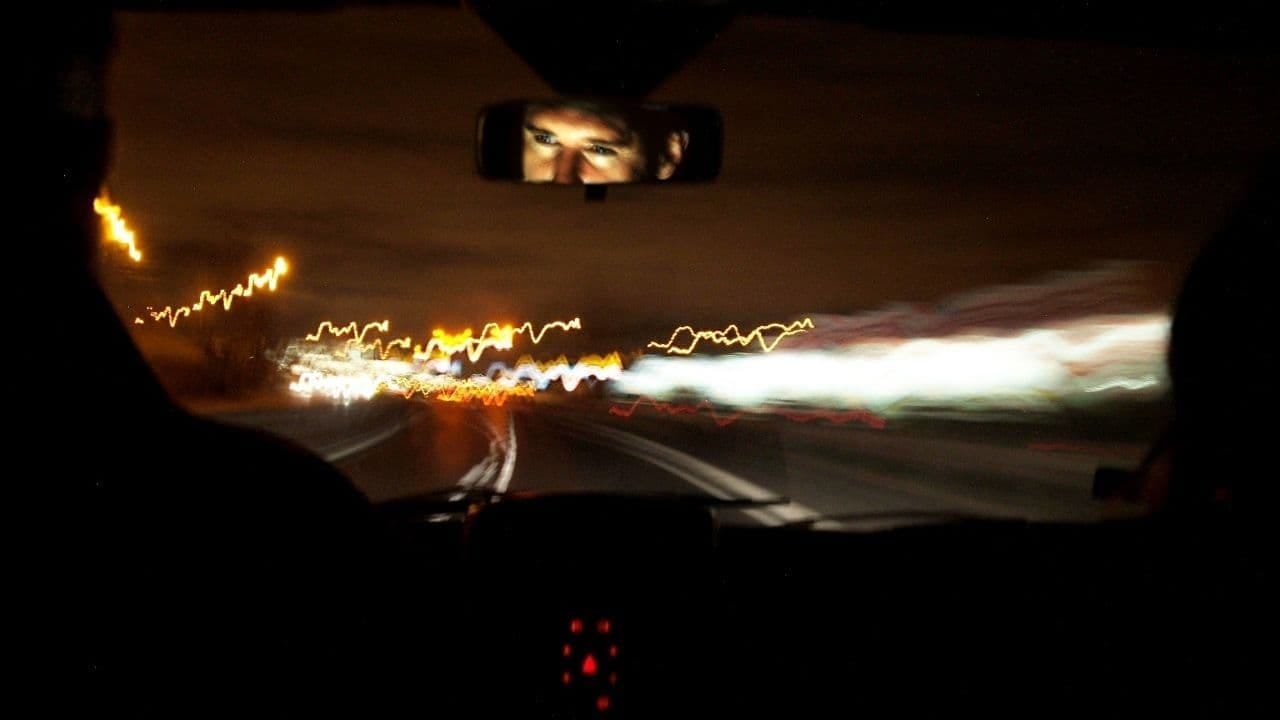
David Lynch's Lost Highway (1997), as a work of cinematic art, feels to me similar to jazz musician Fred Madison's (Bill Pullman) frenetic sax solo near the beginning of the film. There is an improvisatory air to the movie, even in its more calculated sequences, that fits perfectly with the director's variation on noir. Lynch uses familiar noir tropes but also transcends them, escaping into an entirely new realm, one that he referred to as "the first 21st century film noir."
At the core of noir is often the desire of its protagonists to escape their current circumstances, to find some way of breaking free from the world that has entrapped them, even if that invariably results in a doomed ending for them. In Lynch's Lost Highway (1997), however, that desire for escape becomes something far more abstract. Madison is not simply trying to escape his circumstances. He appears to be trying to escape his own fractured mind, to find some kind of resolution in a world where resolution itself can become an impossibility, particularly in Lynch's universe, as seen in works such as Twin Peaks: The Return (2017) and Inland Empire (2006).
This is where Lynch's modern noir becomes so disturbing. The film retains the recognisable characteristics of noir while stripping away the narrative safety rails that usually accompany them. We are presented with familiar images, characters and situations, the powerful boss figure, the femme fatale, the doomed male protagonist, but they never settle into anything fully comprehensible in relation to what we have seen before in films such as Double Indemnity (1944), In a Lonely Place (1950) or Out of the Past (1947). Watching Lost Highway (1997) can feel like remembering something from a distant yet strangely familiar dream, only to find those fragments shattered into jagged shards as the film moves through an arbitrary and, at times, seemingly illogical sequence of events. The familiar is constantly being transformed into something alien.
Lynch understands only too well that fear is born out of chaos, from the uncertainty of not knowing what lies ahead for the characters or for us as the audience. Noir traditionally operates within a corrupt and dangerous world, but it remains a world that can, at least theoretically, be understood and which adheres to a moral code of sorts. In its nihilistic approach, Lost Highway (1997) removes even that certainty. The mystery cannot simply be solved because the reality in which the mystery exists is itself unstable, something that aligns with Madison's own admission: "I like to remember things my own way."
Patricia Arquette's doppelgänger characters, Alice Wakefield and Renee, meanwhile, assume an almost timeless, archetypal quality, seeming to be reborn in different iterations. In this sense, they recall Kundry in Wagner's Grail opera Parsifal (1882), a mysterious and cursed female figure whose identity stretches across different incarnations and whose existence seems to transcend ordinary time, making her both a woman and a recurring mythological archetype. Alice's chilling declaration in the desert at night to a bewildered Pete (Balthazar Getty), "You'll never have me," becomes a particularly potent expression of this idea, a reminder of the seemingly endless desire of the male protagonist to possess his elusive muse, while the object of that desire remains forever beyond his grasp. Lynch thus transforms the conventional noir femme fatale into something more elusive and eternal, a figure who can be desired, pursued and imagined but never truly possessed.
And so, what begins in this fragmented story as noir gradually becomes something more cosmic, where identity, time, space and causality all seem to dissolve into a kind of psychotic anarchy, or a "psychogenic fugue," as Lynch often referred to it when speaking about Lost Highway (1997).
In this sense, Lynch's greatest subversion of noir may be that the desire to escape no longer has anywhere to escape to. Madison's journey leads not towards freedom or resolution, but further into the labyrinth of his own fractured reality. The highway becomes less a road towards some new horizon than an endless passage through a purgatory of uncertainty, where the familiar structures of narrative noir remain occasionally visible but no longer provide us with a reliable guide home. Here again, the jazz analogy works well for Lost Highway (1997). Much like great musicians such as Coltrane or Mingus, who can improvise upon the familiar melodic structures of a Tin Pan Alley song before reimagining them in deconstructed form, Lynch takes the familiar structures of noir and improvises upon them, transforming them into something strange, fractured and entirely his own.
Even the physical concept of a prison offers no real security in this tale, serving as a symbol of containment. Fred can, in a manner of speaking, leave the confines of his cell, but there is no corresponding freedom from the psychological prison that surrounds him once he has transferred his consciousness into that of a younger character. His transformation into Pete does not liberate him so much as create another identity within which the same anxieties, desires, and patterns of psychosis begin to repeat themselves. The highway therefore becomes a cruel paradox. It suggests movement, escape, and the possibility of reaching somewhere beyond the past, yet every road seems to lead back to the same state of karmic entombment.
Watching Madison attempt to flee in the final reel from a pursuing cavalcade of police cars, their sirens wailing, reminiscent of his own wailing saxophone at the start of the film, we see his face appears to change shape and potentially internally combust in a Francis Bacon-like animation of distortion and chaos.
Lynch returns to this same idea most prominently in Twin Peaks: The Return (2017), where time, identity and energy seem to have no secure footing, and our own desire as viewers to find certainty becomes ultimately futile.
Perhaps he knew we're all driving down our own lost highways to nowhere.