TOO SAD FOR THE HUMAN HEART
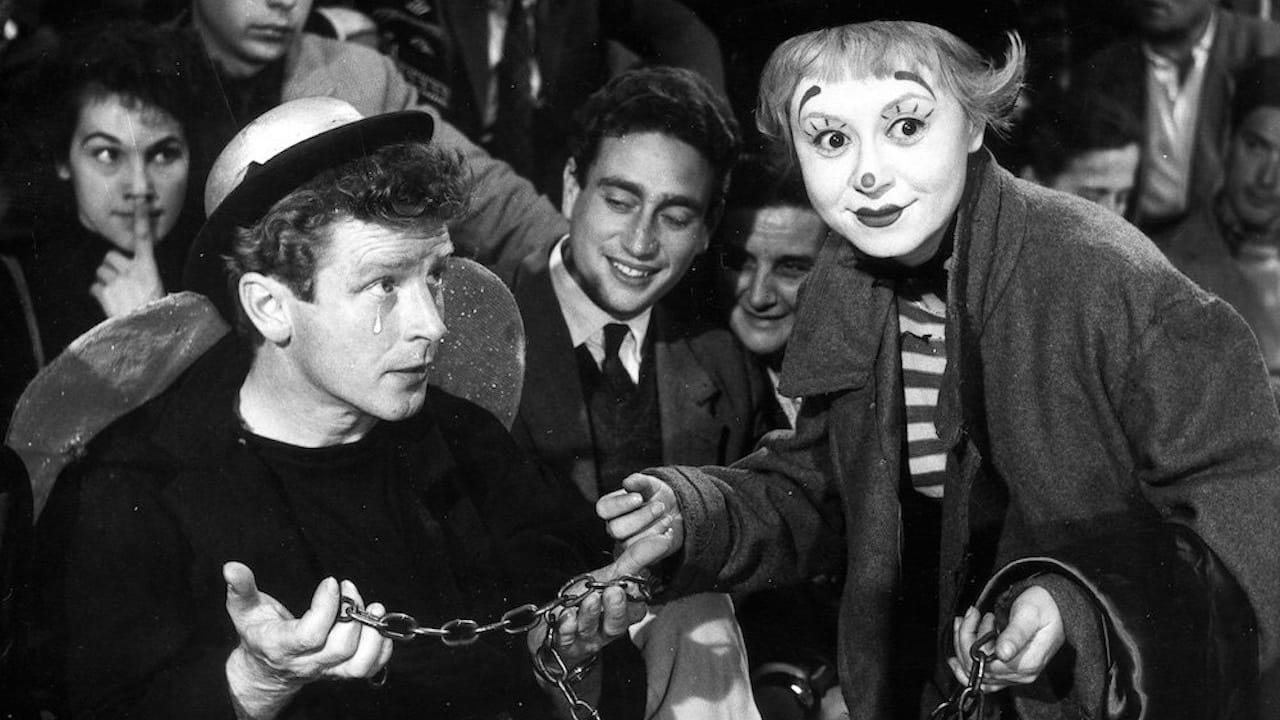
There are some films that are almost too sad for the human heart to bear. Fellini's La Strada (1954) has to be one of those types of films. What it expresses in its simple story is a universal truth about the abuse of innocence at the expense of ignorance.
Rewatching the film in this current magnifying-glass summer heat of the UK, with the occasional breeze blowing through the curtains behind my television like fabric clouds, I seemed to fall into a fever dream while viewing this story of the strong man, played by Anthony Quinn, and the woman he buys from poverty to become part of his circus act, played by Fellini's wife, Giulietta Masina.
So many of Fellini's films are like dreams, a place where reality and fantasy dance for a brief while, typically with fantasy surpassing the trauma of reality, perhaps as a consequence of the unbearable pain of existence that it often masks.
It has been said that La Strada was the beginning of the director's transition away from Neorealism in film, before Fellini sought increasing sanctuary in the surrealism and fantasy elements of his characters' stories. This may have something to do with the fact that Fellini himself suffered a nervous breakdown while making La Strada (later referenced in 8½). Given the subject matter and the heartbreaking performance from his wife and muse, Giulietta, one might wonder if the Italian director almost broke his own heart with this tragic tale, which could almost be a sequel to Leoncavallo's one-act opera Pagliacci by way of Puccini's Il Tabarro. There is a tangible verismo aspect to La Strada which would make it perfect material for an opera. Nino Rota's score for the film reinforces this idea with its haunting main theme, which sounds like a yearning of the human heart as represented by both a violin and trumpet, and which gathers increasing weight and meaning the more it's played throughout the story.
Aside from capturing the transient life of circus performers as they move from one location to another, there is a deep loneliness conveyed in La Strada in how two people who represent two sides of human nature can find themselves bound together along the road of life, regardless of the obvious incompatibility of the sensibilities that inform their intrinsic characters.
Quinn's performance as strongman circus performer Zampanò contrasts to the extreme against Masina's mostly mute Gelsomina, her rare utterances tending to be more like those of a vulnerable child. Giulietta's performance as Gelsomina is certainly one of the great on-screen performances and, as the great Italian-American director Martin Scorsese has stated, "evolves from the ancient world into the Middle Ages and Italy in the Commedia dell'Arte, with the closest comparison you can make to her performance being Chaplin."
Certainly, the range that Masina uses in her husband's film provides so much exquisite pathos, tragedy, comedy, and melancholy that it is near impossible to forget the afterimage of her clown face long after the movie has finished and its end titles faded to darkness.
She embodies the tears of a clown like no other and transcends the timeless archetype beyond its familiar look into something more akin to a ghost wandering through time itself, haunting the hearts and minds of whomever her sad song reaches on the wind. Gelsomina is the conscience of a world that too often forgets its child's heart, a female Jiminy Cricket without the verbosity and without the strength to fight the power of a man who tramples across her delicate existence like a rare flower.
Though I find the film to be emotionally devastating like few others, Fellini's La Strada is a film to treasure, as it reminds all of us that there is nothing more precious than the human heart, where all the sorrow and happiness of the world can be stored.