I, MAX
Smokescreen
There's been a lot of talk of late about the format and presentation of movies at cinemas such as IMAX and those hallowed places that screen large-format 70mm prints. But for me, I have always found that the power of film, like life, finds a way regardless of such luxury experiences.
Certainly, a fair few of my film-obsessed friends really like to geek out about such things as the preferred technical specifications for a film screening, yet I'm rarely bothered. Watching Ryan Coogler's Sinners and Paul Thomas Anderson's One Battle After Another last year at the Waterloo IMAX were two of the most depressing film-viewing experiences I've ever had. That's more to do with the content of the films, not the format, but perhaps being pinned back in my seat with an oversized presentation of two extremely mediocre pictures forced me to recognise their flaws with even greater scrutiny, like noticing defects on two badly constructed houses.
More recently, Christopher Nolan's The Odyssey has launched various memes and reels on social media about seeing his adaptation of Homer's classic in the "correct" format, "the way Nolan intended". Personally, I find all this promotion of format piety a smokescreen for the dearth of truly great content at the movies these days. I personally consider Nolan to be a consistently mediocre director, and yet a PR Wizard of Oz-style illusion has grown around him that he has somehow taken on the mantle of David Lean for the 21st century. Due to his obsession with film preservation and optimum film format, he is now seen as the doyen and saviour of the medium itself. This is an irony for someone who makes such ponderously drab and dreary films that remind me of the sort of bloated cinematic fare that signalled the end of the studio system throughout the 1960s.
There's also a kind of hipster fastidiousness about format presentation now that gives me the proverbial ick. What does it really matter how big the screen is if the films you are watching on it are fundamentally flawed? We live in a content-saturated yet content-starved environment where a great film is as rare as a Fabergé egg. I can think of very few films I would return to watch over and over again from the past five or ten years, yet if we prioritise the screening format of a film, we may somehow find ourselves closer to our cinematic heaven?
Back when I was growing up, we didn't care that the size of our local cinema screen wasn't supersized. I remember one cinema I visited close to my Aunt Hilda's house in Gatley, Cheshire; it seemed like someone's plush living room and was just as cosy. Watching Dead Poets Society felt suitably intimate, as if it could just as easily have been a chamber piece being played in a small local theatre. Watching films like Teen Wolf, Batman, and Dick Tracy may not be considered cinematic epics on the scale of Lean and Nolan, but all we needed was the standard screen, a darkened auditorium where we could forget about sunshine and adults, and our minds would disappear into the stories flickering away on the screen before us, and the obligatory rogue hairs on the gate.
Of course, this was before the explosion of widescreen televisions, and so our expectations were generally lower, as we mostly had tiny televisions in our homes.
Small Town, Small TV
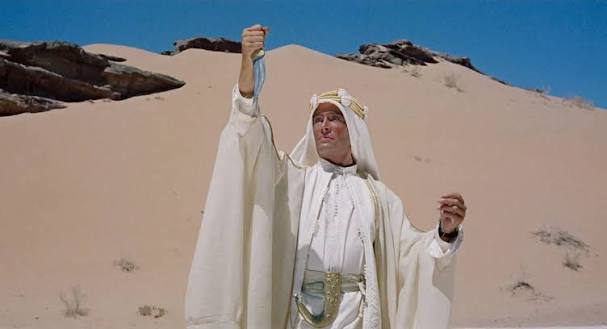
Back when I was first falling in love with the history of cinema, building my own film library with pocket money, and watching movies on the world's smallest television in my bedroom, I can distinctly remember viewing classics such as David Lean's epics The Bridge on the River Kwai and Lawrence of Arabia on it (in letterbox format, which literally felt like watching through a letterbox on my tiny TV), as well as Coppola's visually maximalist Apocalypse Now, and not once considering that I was watching them on a screen that was too small. Perhaps I had adjusted for inflation, as they say, or deflation. As long as there was motion on the screen, I was glued to it, and I honestly can't say my impression of these movies was diminished in any way by the modest scale on which I viewed them. In fact, there was something so delightfully real and authentic about watching movies this way, like those old men watching World Cup games on a beat-up television in some fly-blown favela in South America.
One of the most epic film experiences of my life was watching Star Wars one school night in my brother's and my bedroom. Having bought a carefully selected stash of crisps, chocolate, and fizzy drinks through a serving hatch from the pub next door, the Golden Fleece, not dissimilar to something out of the cantina in Mos Eisley, it felt like the greatest cinema experience imaginable. Watching from our respective beds that seemed more like stationary landspeeders, I can only remember the film in my memory as if I had watched it on a 100ft-high screen. The final descent into the Death Star trench is literally entrenched in my memory as if I was carrying out the mission myself to destroy the dastardly space station. If I saw it today on a giant IMAX, would it even compete with that original memory?
A few years later, I remember spending the first night in my family's newly built home with my eldest brother, who was acting as 'security guard' for the place. In this unfurnished place, with parts of the flooring still a skeleton of joists and bearers, we watched a Sunday night Moviedrome presentation of Marlon Brando's One-Eyed Jacks on his tiny black-and-white television that flickered in the large space like a tiny searchlight strobing the freshly plastered walls. I didn't even realise the film was shot in colour, but was simply mesmerised by the propulsion of the scenes and action that ensued.
Afternoons at friends' houses after their parents had rented a bundle of VHS tapes from our local video store, Astrovision, would be as good as if the local Odeon cinema had arrived at our door. Abundant with snacks, watching films such as Explorers, Indiana Jones and the Temple of Doom, and La Bamba, with curtains drawn, we felt like kings enjoying our own royal entertainment. If you happened to grab a popular new title rental before anyone else, you felt truly elite.
Away from the mainstream and developing my own love of old black-and-white movies and world cinema, my resounding memory now is of watching so many classics on small screens as if I really were sitting in a luxury cinema all the while. The thing that mattered most back then was the actual watching of the films, not so much the format.
Late nights having movie marathons with my friend, Tom, watching old Hollywood and Billy Wilder classics for the first time could just as well have been as if we'd been exec producers in our very own private screening room back when they were first previewed in the 1940s, '50s, and '60s. That illusion was only temporarily broken when we had to sneak out of my room to load up on snacks from the kitchen upstairs. I doubt Thalberg or Mayer would have had to be so quiet.
One time, house-sitting for an artist (Peter Joseph), we made the decision to watch The Shining in his lonely-looking studio that was surrounded by dark woods. Seeing the occasional car on the horizon with moon-yellow headlights approaching the isolated cottage filled us with an enhanced dread as I imagined Jack Torrance on his way to chop us up into tiny pieces with his axe.
Once again, could IMAX even compare to this?
What a Small Screen You Have, Grandma
But perhaps my favourite of all cinema-watching experiences was late at night at my Grandmother's house in Heavitree, Exeter, where I would chance upon some late-night movie like De Palma's Blow Out or Laughton's The Night of the Hunter while she was sleeping upstairs. There were repeated raids of her kitchen cupboards for her legendary cheesecake, which would get increasingly devoured as the quality of the film piqued my interest.
A glass of milk, a biscuit here, a biscuit there, and the sense of quietness as I watched the screen in the calmest place on earth felt as if the films I watched were in real time, with only my heartbeat and the chiming of the grandfather clock in the downstairs hallway reminding me not to completely disappear into the film itself like Mia Farrow in The Purple Rose of Cairo. The late night, the quietness of the house, my own eyes and consciousness completely fixated on the film in front of me with no distractions.
Pure content and pure contentedness.
Back then, all I cared about was the watching of the film itself, not the scale of the screen I watched it on. Content over quality. Stanley Kubrick, delighted after watching a television screening of his movie Barry Lyndon with his family, kept the dimensions of the TV experience in mind when he shot The Shining, sensing that it was important to consider all ratios, big and small, when thinking about how the viewer would enjoy his movies on the big screen or at home. Great films can mesmerise in any capacity, to my mind, whether it's from the framing to the script to the characters' faces to the audio atmosphere.
If I ever watch Christopher Nolan's The Odyssey (which I highly doubt), I will prefer to see it on the smallest screen to see how much of its effectiveness remains after all the spectacle.
For me, that's the measure of greatness: what's left after the circumstance, after the pomp.
And there's surely plenty of pomp around right now.
Maybe I'm being equally pretentious as those format blowhards in my contrarian nature here. But someone has to make a case for the small-screen dreamers.